Introduction
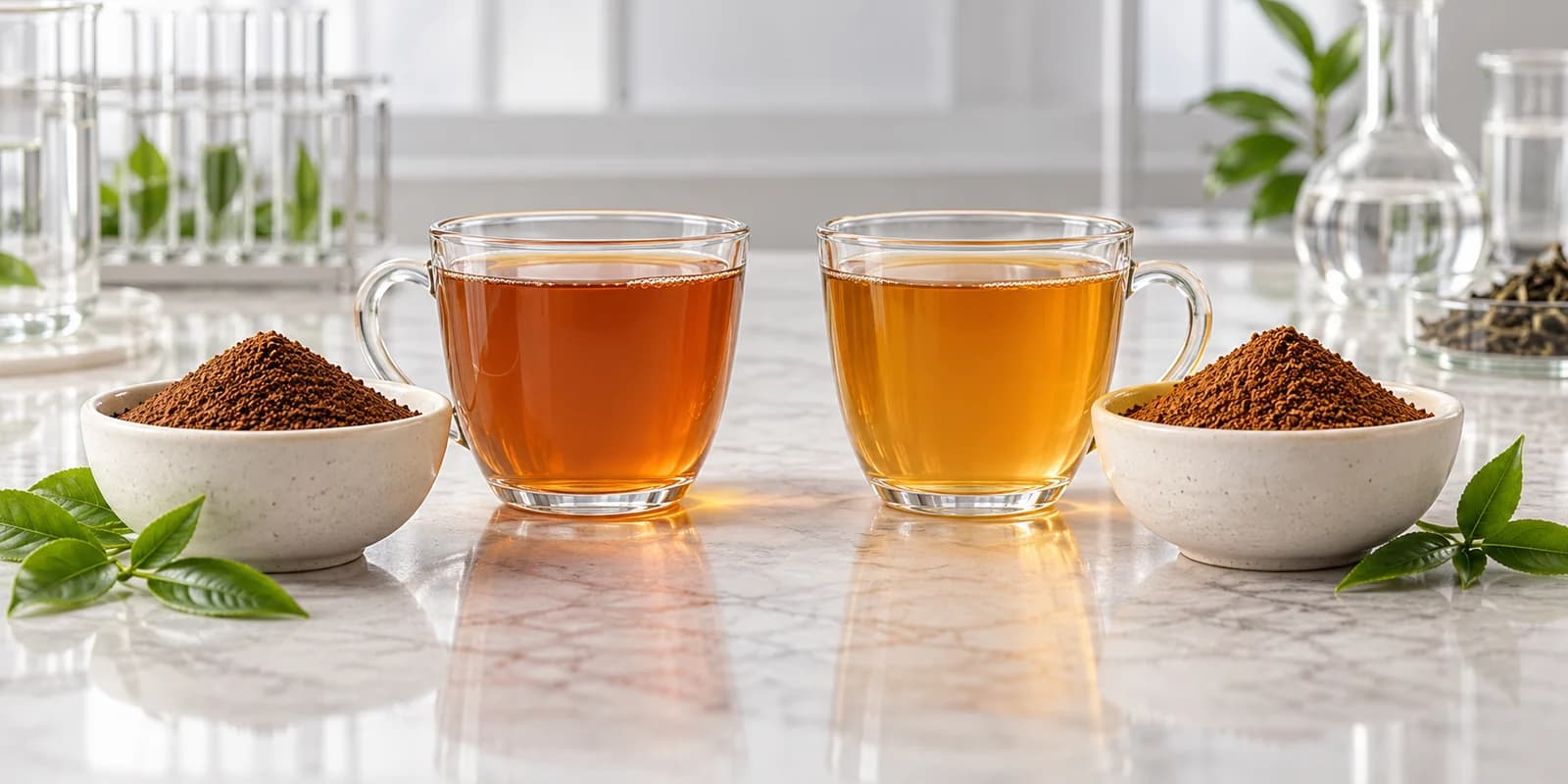
Broken tea leaves and instant tea powder can both deliver tea character to a commercial beverage, but they enter the process at different stages. Broken leaves are brewed or extracted, then separated from the liquid. Instant tea powder is a previously extracted tea material in solid form that is reconstituted during beverage preparation.
The choice changes more than an ingredient line on a bill of materials. It can affect water demand, extraction equipment, filtration, yield accounting, process time, waste handling, storage, dosing, sensory adjustment and the way batch consistency is controlled. Neither format is universally superior.
Short answer: Choose broken tea leaves when in-house extraction is part of the desired process and the facility can control water, time, temperature, separation and extract holding. Choose instant tea powder when a dry, doseable tea ingredient better fits the line and target beverage. In both cases, compare the finished beverage under matched sensory and process conditions before approving a route.
This guide helps development and procurement teams structure that comparison. It provides general information only and does not claim that one route will reduce cost, improve quality or fit every market.
What are broken tea leaves?
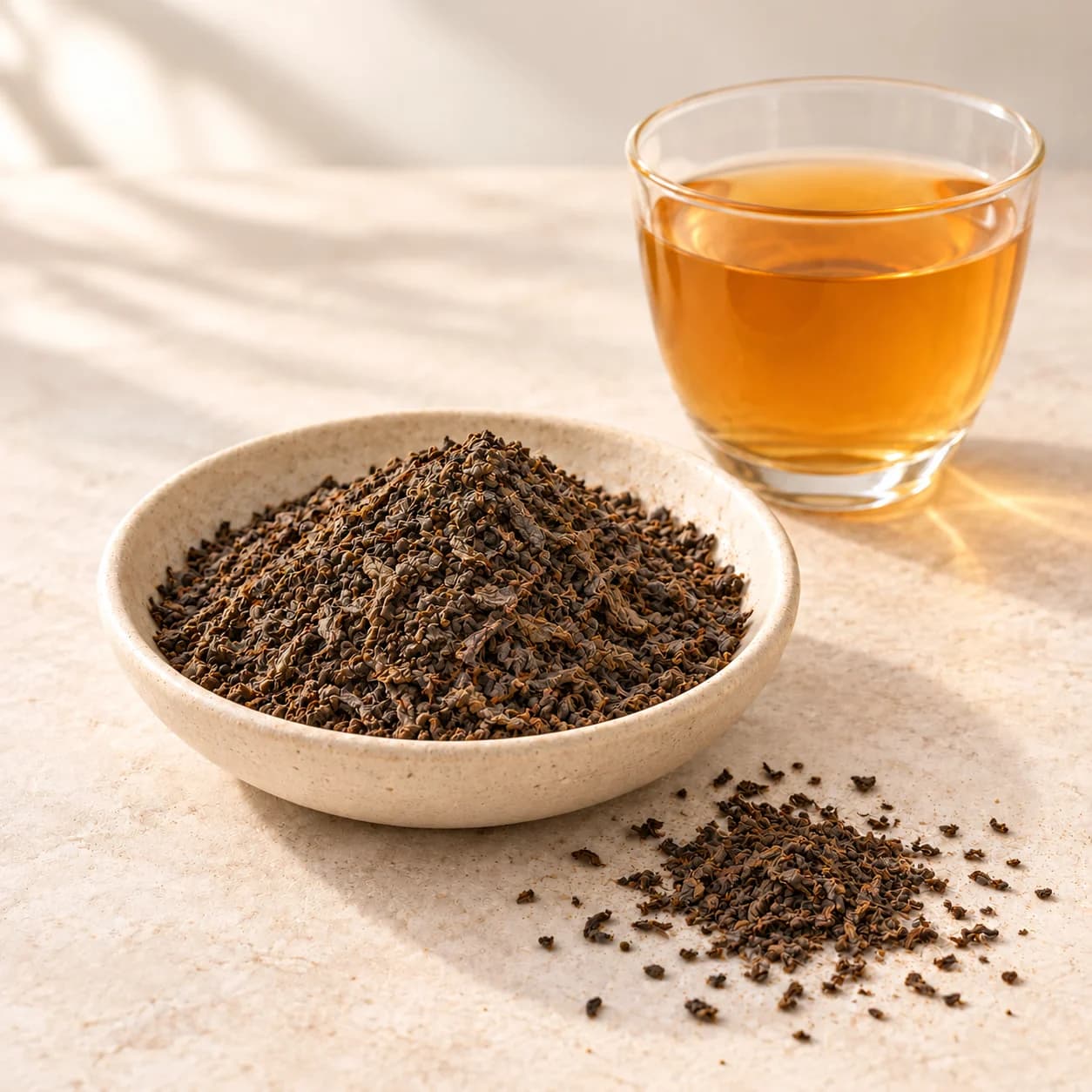
Broken tea leaves are processed tea leaf pieces rather than a soluble extract powder. “Broken” describes physical grade or form; it does not by itself define quality, flavor strength or suitability for a beverage. The tea type, cultivar, origin, season, manufacturing process, particle distribution, storage and brewing conditions can all influence the infusion.
In beverage production, broken leaves normally require a controlled extraction step. Water contacts the tea under defined conditions, soluble and dispersible components move into the liquid, and the spent leaf is separated. The resulting extract may then be blended with other ingredients and processed further.
The exact tea category should be named. ISO 20715 classifies major tea types such as black, green, white, oolong, dark and yellow tea based on processing principles. A generic request for “broken tea” leaves too many variables unresolved.
What is instant tea powder?
Instant tea powder is a solid tea extract intended for reconstitution. ISO 6079 specifies instant tea in solid form within its defined scope and explicitly excludes several other categories. Commercial buyers should still verify the exact product identity because “tea powder” can also refer to matcha, milled leaf material or a formulated preparation.
For a beverage line, instant tea powder moves the primary leaf-extraction operation upstream to the ingredient producer. The beverage manufacturer still needs to define dosage, water conditions, mixing, filtration if any, heat treatment and finished-product controls. “Instant” does not remove the need for application testing.
The central difference: extraction versus reconstitution
Broken leaves require the beverage maker to create and control an extract. Instant powder requires the maker to reconstitute a supplied extract solid. This distinction organizes most of the practical trade-offs.
| Decision area | Broken tea leaves | Instant tea powder |
|---|---|---|
| First operation at beverage plant | Extraction or brewing | Weighing and reconstitution |
| Solid separation | Spent leaf must normally be removed | Depends on product and process; soluble powder is selected to dissolve |
| Main control variables | Water chemistry, ratio, temperature, time, agitation and separation | Powder identity, dose, water temperature, mixing and formula compatibility |
| Material after use | Wet spent leaf and process losses | Empty ingredient packaging and any process residue |
| Adjustment during development | Change leaf, extraction conditions or blend | Change product, dose, mixing or formula |
| Sensory comparison basis | Standardized extract at measured strength | Standardized reconstituted tea at matched strength |
The table describes process logic, not a quality ranking. A well-controlled leaf extraction can be highly repeatable, while a poorly defined instant-powder process can vary. The reverse is also true.
How extraction conditions shape a leaf-based beverage
Published tea-infusion research consistently treats water temperature, extraction time, water-to-tea ratio and particle size as relevant variables. Their effects can interact. Results from one tea and laboratory method should not be turned into a universal recipe, because the sensory target and tea material differ among projects.
Water-to-tea ratio
The ratio affects extract concentration, equipment loading and subsequent dilution. Record both the weighed leaf mass and actual water volume. If the process includes water retained by wet leaf or losses during separation, use a mass balance rather than assuming all added water becomes usable extract.
Temperature and time
Higher temperature or longer contact can increase the extraction of some compounds, but may also change bitterness, astringency, aroma and color. The goal is not maximum extraction at any cost. It is a reproducible extract that fits the finished beverage.
Define start and end points carefully. “Brew for ten minutes” is ambiguous if the kettle takes several minutes to recover temperature after leaf addition. Record the liquid temperature profile and the moment timing begins.
Particle size and agitation
Smaller leaf pieces can change extraction rate and separation behavior. Agitation affects contact between water and leaf but may also increase fines in the liquid. A grade that extracts quickly may place greater demand on the filter system. Evaluate the full operation rather than selecting on cup strength alone.
Water composition
Water minerals, pH and dissolved substances can influence extraction and sensory character. Use the intended process water in pilot trials. If multiple plants have different water supplies, confirm whether one method transfers or whether local adjustment is required.
Separation and holding
The extraction is not complete from an operational perspective until the leaf is separated and the liquid is moved to the next controlled stage. Screen, filter or centrifuge selection affects clarity, yield and cycle time. Holding a warm extract can change aroma, color and microbiological risk; the manufacturer must establish safe, validated controls.
How reconstitution conditions shape an instant-tea beverage
Instant tea powder removes the need to brew whole or broken leaf at the beverage plant, but it creates its own control points.
Product identity and dosage
Use a named sample connected to product information. Weigh the powder rather than estimating by volume. If two candidates have different bulk density or flavor intensity, the same scoop size does not produce a valid comparison.
Water temperature and mixing
Define the lowest and highest practical water temperatures for the process concept, then test the intended operating point. Record powder addition point, mixer type, speed and time. A powder that dissolves in a small hot-water preblend may perform differently when dosed directly into a large ambient tank.
Finished-formula compatibility
Acids, sugars, proteins, minerals, alcohol, flavors and stabilizers can affect perceived tea character and physical behavior. Reconstituting powder in water establishes a baseline, but approval should occur in the complete beverage formula and intended process.
Heat and storage response
Reconstituted instant tea can change during pasteurization, hot filling or storage. Evaluate color, aroma, flavor, haze and sediment before and after the actual pilot process. A powder’s dry shelf stability does not establish the shelf life of the finished drink.
Compare sensory quality fairly
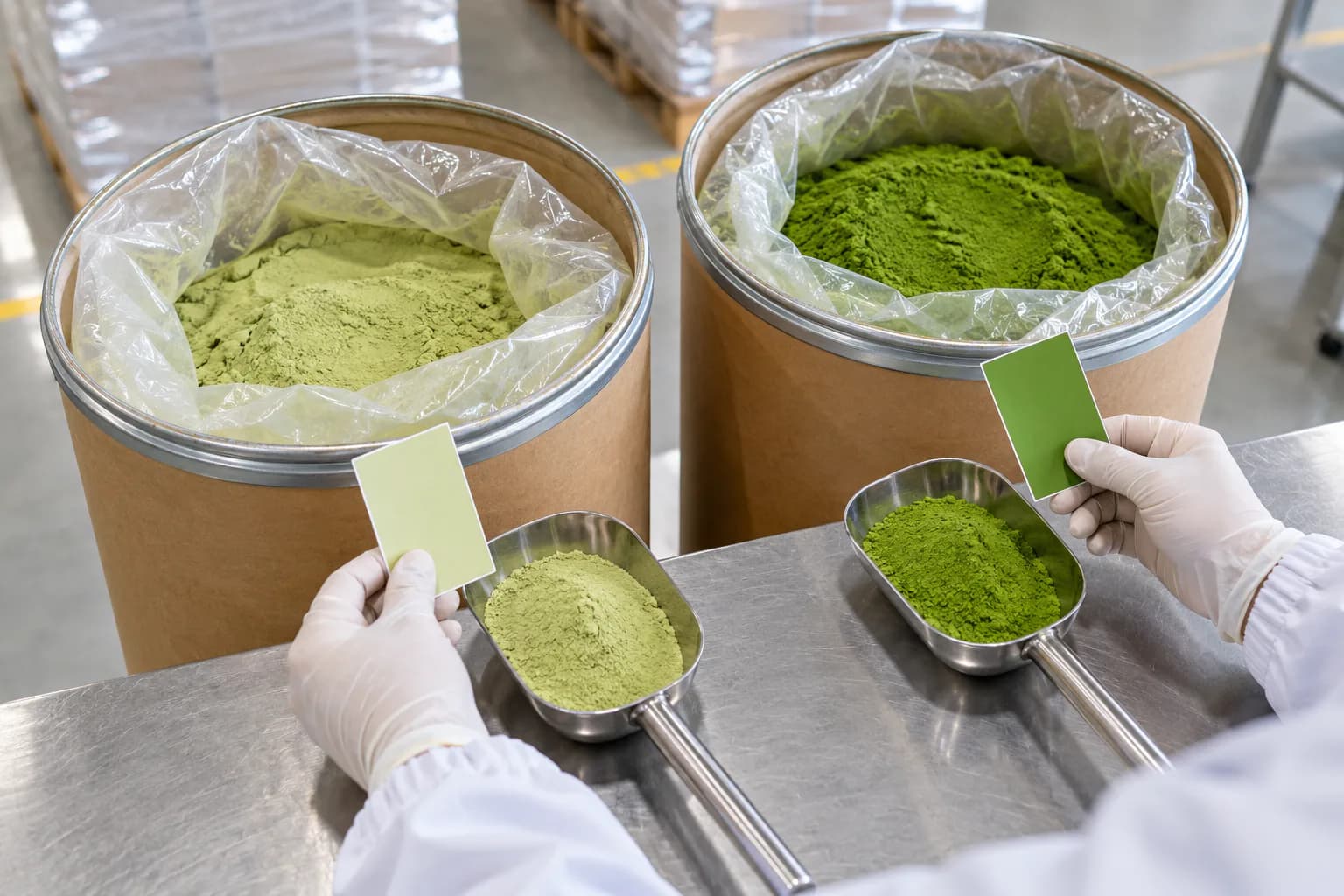
A fair comparison requires equivalent conditions. If the leaf extract is much stronger than the reconstituted powder, a panel may simply prefer the more intense sample. If sweetness or acidity differs, the test measures the whole imbalance rather than tea format.
Create a matched comparison
- Select one tea type and sensory direction.
- Prepare the leaf extract with a documented method.
- Reconstitute the instant tea with a documented method.
- Adjust samples to a justified common basis, such as a target sensory intensity or measured solids parameter chosen by the development team.
- Apply the same surrounding formula.
- Serve coded samples at the same temperature.
- Evaluate aroma, tea identity, bitterness, astringency, color, body and aftertaste.
- Repeat after the intended process, not only before it.
Do not use one analytical number as a complete substitute for sensory comparison. Soluble solids can help standardize concentration, but equal solids do not guarantee equal tea aroma or flavor because composition differs.
Use language that supports decisions
Panel descriptors should be concrete: fresh green note, roasted note, floral aroma, briskness, drying astringency, lingering bitterness, red-brown color or visible haze. Terms such as “authentic,” “premium” and “natural” may be meaningful in marketing, but they are difficult to use as technical acceptance criteria unless the team defines them.
Equipment and operations to compare
Leaf extraction route
A leaf-based process may require:
- a suitable extraction or brewing vessel;
- controlled water heating and measurement;
- agitation or recirculation where justified;
- screens, filters or other solid-separation equipment;
- transfer and extract-holding controls;
- spent-leaf collection and disposal arrangements;
- cleaning procedures for leaf-contact equipment; and
- records linking tea lot and extraction batch.
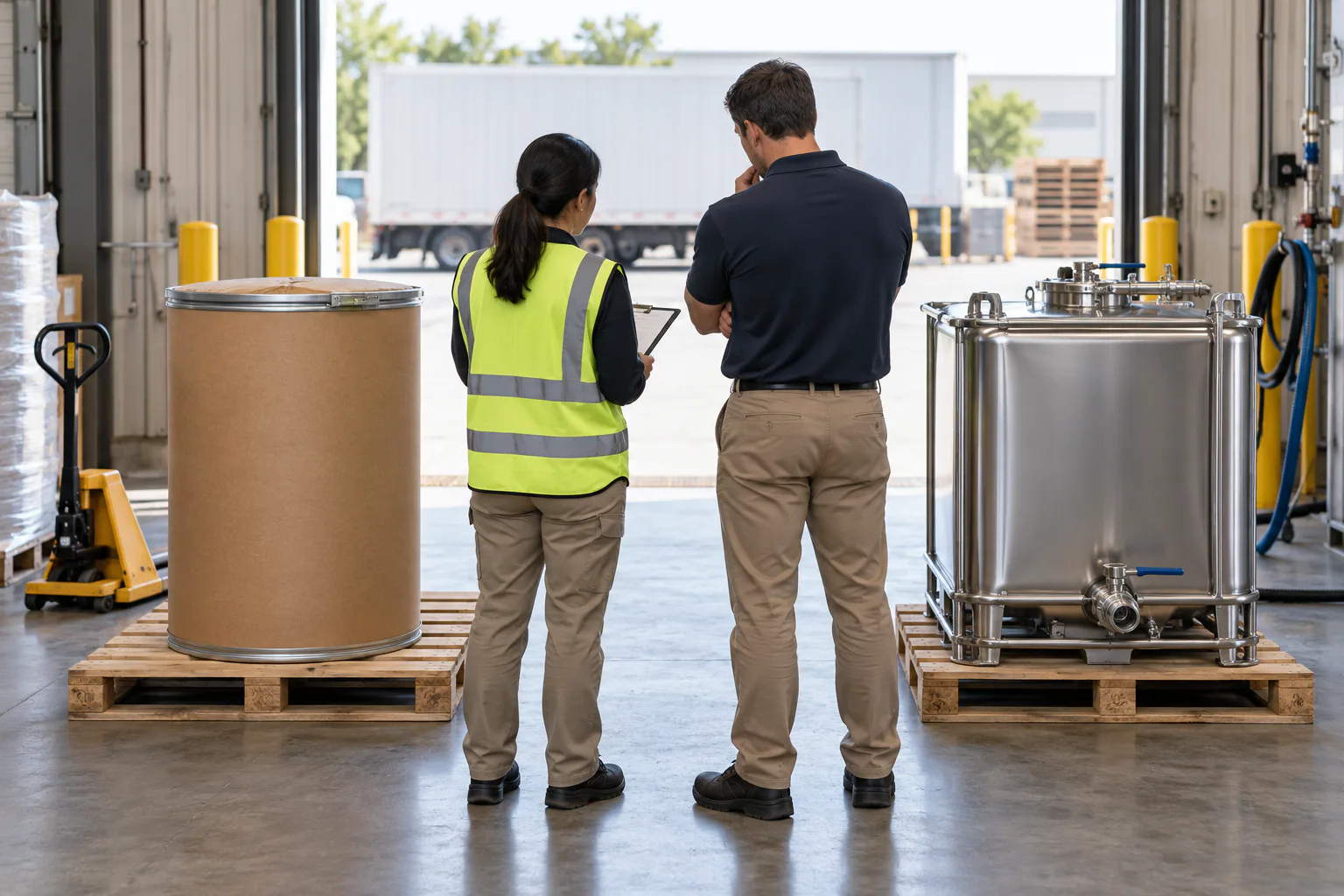
The actual requirement depends on scale, tea grade and beverage target. Do not assume an existing syrup tank can become a validated tea extractor without engineering and food-safety review.
Instant-powder route
An instant route may require:
- controlled powder storage and dispensing;
- dust-conscious and food-appropriate handling;
- accurate weighing or feeding;
- a suitable addition point and mixer;
- preblend equipment if the formulation needs it;
- controls for agglomeration or wall adhesion; and
- traceability between powder lot and beverage batch.
The route is often operationally different, not operation-free. Powder handling, worker protection, sanitation and cross-contact controls still need site-specific assessment.
Yield and cost: use a complete model
Ingredient price per kilogram cannot determine the lower-cost route by itself. Broken leaves and instant tea powder have different concentration and process roles. A useful model follows material through the entire operation.
For broken leaves, consider tea dose, extract concentration, water, energy, labor, cycle time, retained liquid in spent leaf, filtration loss, cleaning and waste handling. For instant powder, consider effective dose, handling loss, mixing time, packaging disposal, storage and any additional formulation or processing needs.
Compare cost per unit of acceptable finished beverage at the validated dose, not cost per kilogram of unlike ingredients. Include rejected or reworked output only when supported by actual internal data; do not invent failure rates.
Capacity can be the deciding constraint
An extraction vessel occupies time and space. A powder route uses weighing and mixing capacity. If the plant’s bottleneck is filtration or cleaning, leaf extraction may limit throughput. If accurate low-dose powder handling is unavailable, instant tea may require investment or a premix solution.
Map the actual line before making a sourcing decision. A technically good ingredient can be commercially unsuitable when it conflicts with the plant’s core constraint.
Consistency and quality-control questions
Both formats are agricultural tea products and should be managed through defined product and process controls. The controls differ.
For broken tea leaves
Monitor the incoming named product and lot according to the buyer’s plan. At extraction, record leaf mass, water, ratio, temperature profile, time, agitation, separation and extract yield. Finished extract checks might include sensory evaluation and relevant physical or chemical measurements selected by the quality team.
For instant tea powder
Record product identity, lot, powder mass, water, mixing conditions and finished-batch checks. Confirm that the approved sample and later commercial material are connected through the agreed product and traceability system.
For either route
Establish acceptance criteria before reviewing results. Confirm required documents and destination-market responsibilities. Do not treat general standards or a supplier’s marketing page as proof that a particular lot meets the buyer’s specification.
Which format fits which project?
Broken tea leaves may fit when:
- the brand or process concept intentionally includes in-house tea extraction;
- the facility has suitable extraction, separation and cleaning capability;
- the team wants to tune infusion variables at the beverage plant;
- spent-leaf handling is operationally acceptable; and
- the desired sensory profile is reproducible through the validated process.
Instant tea powder may fit when:
- a dry, doseable tea ingredient aligns with the line;
- extraction and spent-leaf separation are not desired at the beverage plant;
- the powder performs in the actual formula and thermal process;
- accurate powder handling and traceability are available; and
- product-specific information and commercial conditions meet the buyer’s review.
A dual-route strategy may fit when:
Some manufacturers use leaf extraction for one product family and instant tea for another. Others explore blended approaches. Any combined route should have a clear technical purpose and its own evaluation; complexity should not be added merely to tell a marketing story.
Common decision errors
“Broken leaves are always more authentic”
Authenticity is a brand and consumer-perception concept, not a self-proving technical fact. The finished beverage experience depends on tea, extraction, formulation and process. If a claim is proposed, marketing and regulatory teams should substantiate it for the market.
“Instant tea always tastes weaker”
Tea intensity depends on the selected product, dosage, formula and serving condition. Compare matched finished beverages. A category-wide conclusion from one sample pair is not reliable.
“Instant powder eliminates filtration”
A soluble instant tea may reduce the need to remove spent leaf, but the finished beverage can still contain other suspended materials or need process filtration. Equipment decisions belong to the complete formula and line.
“A strong laboratory brew will scale directly”
Scale changes heat transfer, mixing, extraction kinetics, separation and holding. A benchtop brew is a screening tool. Pilot and production validation are separate steps.
“The cheaper ingredient is the cheaper route”
Unlike formats cannot be compared by purchase price alone. Model dose, yield, labor, energy, equipment time, losses, cleaning and waste at the finished-beverage level.
Frequently asked questions
Are broken tea leaves the same as tea dust?
Not necessarily. Tea grading terms describe different particle forms and can vary by tea system and trade usage. Request the exact product description, grade and sample. Do not infer sensory quality from the word “broken” alone.
Is instant tea powder made from real tea leaves?
Instant tea is produced from tea extraction and converted to a solid form, but the exact raw material and process for a specific commercial product should be confirmed through product information. Do not assume details that the supplier has not verified.
Which format is better for RTD tea?
Either can be used depending on the beverage target and plant capability. Leaf extraction provides in-house control of brewing; instant powder provides a dry reconstitution route. Compare process fit, sensory result, consistency and total operating requirements.
Do broken leaves create a stronger tea flavor?
They can produce a strong extract under some conditions, but strength depends on tea type, ratio, temperature, time and other variables. Instant tea dosage can also be adjusted. Strength alone does not establish better flavor or fit.
Is instant tea powder completely soluble?
Instant tea is selected as a soluble extract format, but actual performance depends on the named product, concentration, liquid, temperature, mixing and complete formula. Confirm under the intended application method rather than relying on a category label.
How should leaf tea and instant tea be compared in a tasting?
Prepare both with documented methods, align them on a justified concentration or sensory basis, use the same surrounding formula, code the samples and serve at the same temperature. Repeat the comparison after the intended beverage process.
Which route produces less waste?
The waste streams differ. Leaf extraction produces wet spent leaf and potentially more process water or filter material; powder use produces ingredient packaging and process residues. Quantify the actual facility’s streams before making an environmental or cost claim.
Can the same specification be used for both formats?
No. Broken leaf and instant powder are different ingredient forms with different relevant characteristics. The buyer should establish product-specific specifications and separate process controls while aligning finished-beverage acceptance criteria where useful.
Conclusion
Broken tea leaves and instant tea powder represent two different routes to tea flavor in a beverage plant. One begins with controlled extraction and solid separation; the other begins with controlled weighing and reconstitution. The right choice depends on the finished drink, sensory target, equipment, capacity, quality system and total operating model.
Create a fair comparison by naming the tea category, documenting both preparation routes, matching the finished samples on a justified basis and testing them through the intended process. Then connect the preferred route to product-specific information, traceability and commercial review.
Educational disclaimer
This article is for general educational and informational purposes only. It is not purchasing, commercial, legal, regulatory, food-safety, environmental or technical decision advice. Process examples are neutral industry methods and do not describe a Healsun factory, customer, incident, failed batch, yield, cost or guaranteed outcome. Product identity, specifications, documentation, origin, packing, process performance and market suitability must be confirmed for the named product and independently validated.
References
- ISO 20715:2023 — Tea — Classification of tea types
- ISO 3720:2011 — Black tea — Definition and basic requirements
- ISO 6079:2021 — Instant tea in solid form — Specification
- Effects of brewing conditions on phytochemical composition and sensory qualities of green tea infusion
- Factors affecting the caffeine and polyphenol contents of black and green tea infusions