Introduction
Decaffeinated instant tea powder is not simply a regular tea powder with a different number on a specification. Removing caffeine can occur at different stages and may also change aroma, taste, color or other tea components. At the same time, “decaffeinated” does not necessarily mean caffeine-free. Buyers therefore need to connect product identity, analytical method, serving calculation and application testing.
Short answer: Choose between decaffeinated and regular instant tea powder by defining the finished product’s caffeine objective, confirming the exact tea format and analytical basis, then comparing coded samples in the complete formula. Review caffeine per serving, not powder percentage alone. Validate sensory quality, processing and destination-market labeling separately; a supplier name or “decaf” description is not sufficient evidence.
This article is general education, not medical, labeling or regulatory advice and not a statement that Healsun supplies every category discussed.
Start with product identity
ISO 6079:2021 specifies instant tea in solid form within a stated scope, but explicitly excludes decaffeinated instant tea. That exclusion does not mean decaffeinated powder is unsuitable; it means the buyer should not assume the standard covers it. Product-specific identity and documentation are required.
Regular instant tea powder may retain the naturally occurring caffeine associated with its source and process. Decaffeinated powder has undergone a caffeine-reduction process or is made from decaffeinated tea material. Neither description establishes an exact caffeine level without a defined test.
Confirm:
- tea type and botanical source;
- instant extract versus milled leaf or another preparation;
- whether decaffeination occurs before or after extraction;
- added carriers or aromatic materials, if any;
- caffeine result, unit, dry or as-is basis and method; and
- the product-specific specification and sample identifier.
“Decaffeinated” is not the same as “caffeine-free”
The U.S. FDA notes for consumers that decaffeinated coffee and tea contain less caffeine than regular versions but may still contain some caffeine. This is a useful general distinction, not a finished-product labeling rule for every market.
Commercial teams should define their real objective:
- lower caffeine than the regular reference;
- a target maximum in the ingredient;
- a target amount per finished serving;
- a market-specific “decaffeinated,” “low caffeine” or “caffeine-free” claim; or
- no front-of-pack caffeine claim, with internal formulation control only.
These are different projects. A powder can meet an internal ingredient limit yet fail a serving claim because dosage, serving size or other caffeine sources differ.
How caffeine can be measured
ISO 10727:2002 specifies an HPLC method for caffeine in tea and instant tea and is applicable to green, black and decaffeinated tea products. The standard was confirmed in 2024. A laboratory result should still be interpreted with its sample, preparation, reporting basis and measurement uncertainty.
Ask the laboratory or supplier:
- Which method was used?
- Was the result reported on an as-is or dry-matter basis?
- What unit is shown?
- Which lot or sample was tested?
- What reporting limit and uncertainty apply where relevant?
- Is the result a typical value, specification limit or lot result?
Do not compare one value in percent with another in milligrams per kilogram without correct conversion and basis alignment.
Convert ingredient data into a serving calculation
The finished-product team needs a mass-balance calculation using the actual powder addition and serving size. The logic is simple, but the inputs must be controlled:
caffeine per serving = caffeine concentration in powder × powder mass used per serving, adjusted for units and any validated process effect.
If a beverage also contains coffee, cocoa, guarana, yerba mate or another caffeine source, include it. If the powder specification gives a maximum, calculate a conservative maximum rather than only a typical value. Then verify the finished product analytically when the claim or risk requires it.
This article does not supply a universal caffeine threshold because definitions, claims and requirements vary by market and product category.
Sensory differences to evaluate
Decaffeination aims to reduce caffeine, but caffeine is only one contributor to tea taste. The process may also affect volatile compounds, polyphenols or other components depending on the material and method. Published decaffeination research is method-specific and cannot predict every commercial ingredient.
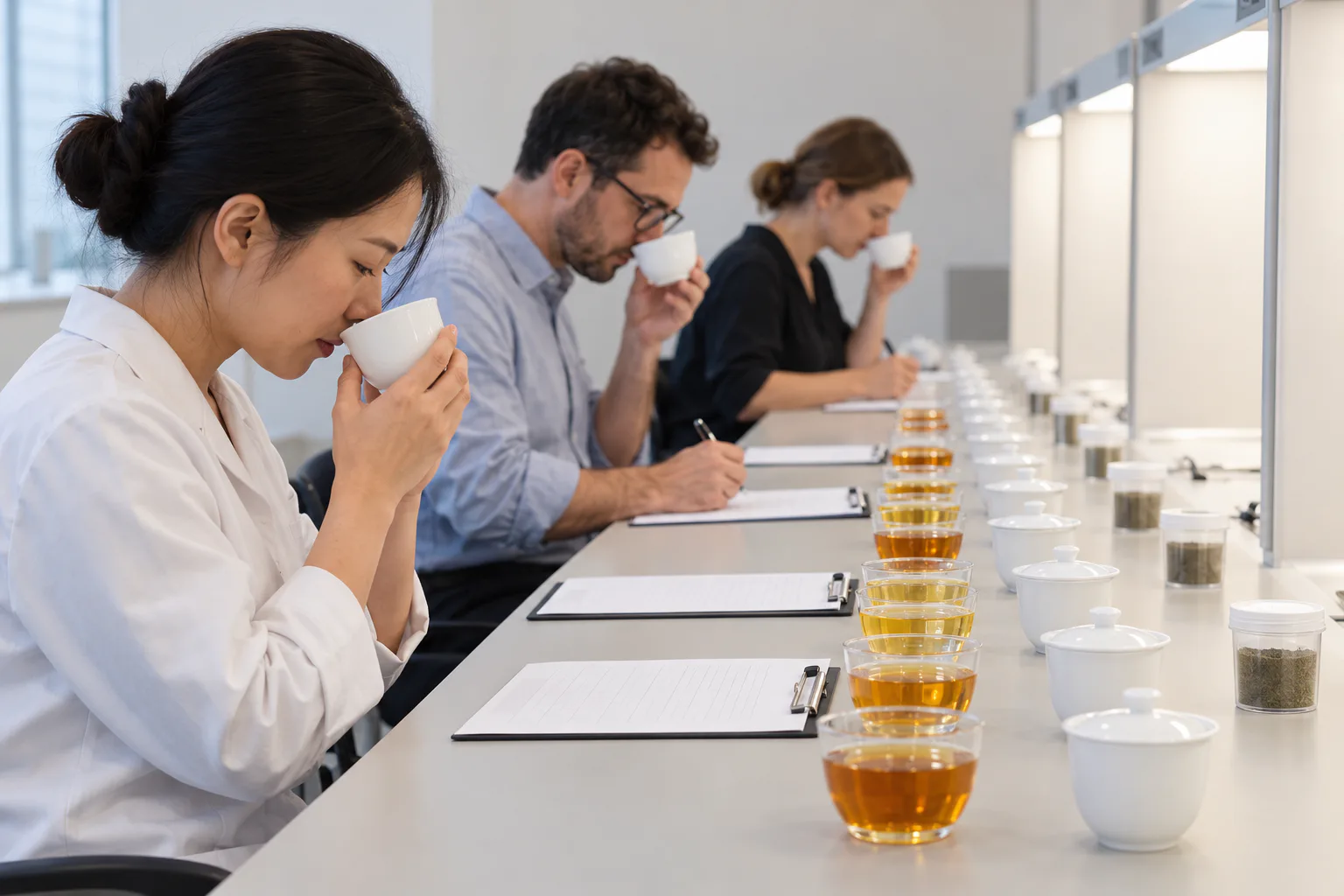
Compare:
- recognizable tea aroma;
- bitterness and astringency;
- body and aftertaste;
- color and clarity;
- performance with sweetener, acid, dairy or plant base; and
- change after heat and storage.
Do not assume that lower bitterness proves lower caffeine. Sensory perception is influenced by multiple compounds and the complete formula. Use analytical testing for caffeine and sensory testing for product fit.
Build a useful sourcing brief
Include:
- finished format and destination market;
- regular or decaffeinated category requested;
- intended caffeine objective and claim, pending regulatory review;
- serving size and approximate powder dosage;
- tea type and flavor direction;
- matrix, pH and thermal process;
- desired color and clarity;
- package and storage concept;
- documentation and testing questions; and
- the decision the sample trial must support.
Avoid “zero caffeine” or “completely caffeine-free” unless current product-specific evidence and market rules support that statement.
Controlled comparison workflow
Step 1: Code and document samples
Record the exact commercial name, sample or lot identifier, receipt date and supplied specification. Keep decaffeinated and regular candidates connected to their records. Do not identify an unmarked sample later by color or aroma.
Step 2: Align caffeine data
Convert all results to one unit and reporting basis. Flag missing methods, unclear basis or results from a different lot. Separate a contractual limit from a certificate result and from an informational typical value.
Step 3: Prepare one fixed formula
Use the same water or base lot, powder dosage, mixing sequence, temperature, equipment and time. Include a no-tea control where it helps. If the project compares products at equal tea flavor rather than equal powder mass, run a separate sensory-matching stage and preserve both sets of results.
Step 4: Evaluate fresh samples blind
Use coded, randomized samples at the intended serving temperature. Record aroma attributes, bitterness, astringency, sweetness, body, color and aftertaste. Separate descriptive observations from preference.
Step 5: Apply the intended process
Process representative samples under qualified heat, filling and cooling conditions. Record the actual time–temperature history and compare pre- and post-process sensory and physical behavior. Do not infer a change in caffeine from flavor change; test when evidence is needed.
Step 6: Run package and storage work
Follow the selected product through a qualified shelf-life program. Track color, aroma, taste and physical stability. Confirm caffeine in the finished product at appropriate points when required by the project’s claims or controls.
How to interpret common differences
The decaffeinated sample tastes weaker
Check equal solids, preparation, water, temperature and sample identity. A weaker profile may reflect the named product and process, not decaffeination as a universal category effect. Compare another candidate or adjust the complete formula, then recalculate caffeine per serving.
The decaf sample is less bitter
Do not use bitterness as a caffeine assay. Tea polyphenols, acids, sweeteners and serving temperature influence perception. Treat the observation as sensory evidence only.

The lot result differs from the specification value
Determine whether one is a limit and the other an actual result, and check basis, method and uncertainty. A result inside a maximum can legitimately differ from the maximum. Escalate unexplained identity or method discrepancies through the agreed quality process.
The finished beverage exceeds the design calculation
Recheck units, powder addition, serving size, other ingredients, sampling and laboratory method. Use traceable retained samples where available. Do not attribute the result to a supplier before the complete mass balance and records are reviewed.
Procurement and quality questions
- What exact product and tea format is being offered?
- What makes the product “decaffeinated” in the supplier’s description?
- Which caffeine method and reporting basis are used?
- What specification limit and lot evidence are available?
- What other ingredients or carriers are declared?
- Which storage and handling instructions apply?
- How is the approved sample linked to commercial lots?
- What change-notification process can be agreed?
- Which market claims require independent review and finished-product testing?
These questions are not claims about Healsun’s product range or documentation package.
Frequently asked questions
Does decaffeinated instant tea powder contain zero caffeine?
Not necessarily. Decaffeinated generally means less caffeine than a regular counterpart, but exact definitions and claim rules vary. Confirm the named product analytically and review the target market.
Is ISO 6079 applicable to decaffeinated instant tea?
The published ISO 6079 scope excludes decaffeinated instant tea. Use product-specific requirements and appropriate analytical methods instead of assuming coverage.
How is caffeine measured in tea powder?
ISO 10727 describes an HPLC method applicable to tea and instant tea, including decaffeinated products. Laboratories may use other validated methods; compare method, unit and basis.
Can regular powder dosage simply be reduced?
A lower dosage reduces tea solids and may reduce caffeine, but it can also weaken flavor, color and body. Calculate the new serving value and test the finished formula.
Does processing remove caffeine from the beverage?
Do not assume normal mixing or thermal processing creates a meaningful reduction. Use a validated calculation and finished-product testing when the decision requires it.
Can “low caffeine” be used on the label?
That is market- and product-specific. Obtain current regulatory advice and supporting analytical evidence before making a claim.
Should every lot be tested?
Testing frequency belongs in the buyer’s risk-based quality plan and supplier agreement. It depends on specification, process capability, market requirements and claim importance.
Conclusion
The regular-versus-decaffeinated decision combines ingredient identity, analytical evidence, serving mathematics and sensory performance. Align units and methods, calculate the finished serving, compare coded samples in the actual matrix and validate claims for the destination market. “Decaf” on a sample label is the start of the inquiry, not the approval decision.