Introduction
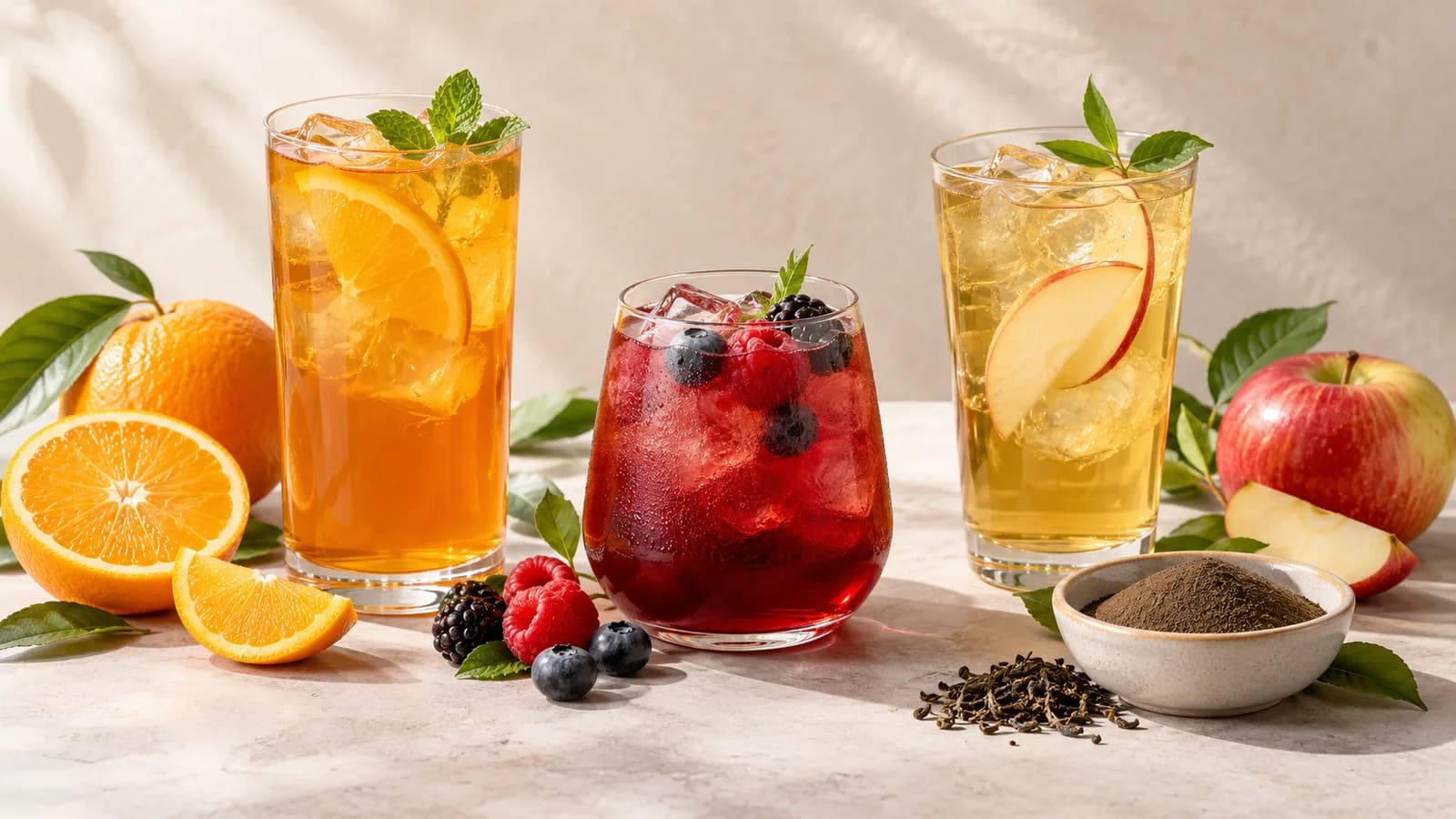
Tea and fruit can create a familiar, refreshing beverage profile, but fruit juice is not flavored water. Juice contributes organic acids, sugars, color compounds, aroma, pulp, minerals and buffering capacity. These components can change tea taste, color, haze and process behavior. A tea powder that performs well in plain water may become overly astringent, visually dull or aromatically hidden in a fruit system.
Short answer: Select tea powder for a fruit beverage by testing named samples in the actual juice system, not water alone. Hold juice lot, tea dosage, acidity, sweetener, process and package constant. Compare tea identity, fruit balance, pH, titratable acidity, color, haze, sediment and aroma before and after heat and storage. A published tea–fruit combination is evidence to test, not a production formula.
This article is educational and does not provide a finished recipe, preservation process or market claim.
Define the product before choosing tea
“Fruit tea” can mean many products:
- brewed tea with a small fruit flavor component;
- tea beverage containing juice or puree;
- juice drink with tea extract;
- powdered drink reconstituted with water;
- sparkling tea-and-fruit beverage; or
- fruit infusion with no *Camellia sinensis* tea.
Write the intended identity, juice percentage concept, tea format and destination market before requesting samples. Ingredient naming and labeling are separate regulatory questions.
Choose the tea format deliberately
An instant tea powder is a soluble extract in solid form within the named product’s definition. A milled whole-leaf powder contains suspended particles. A brewed leaf extract is produced by the beverage manufacturer. A tea flavor serves a different primary function.
For a juice drink, the choice affects clarity, sediment, mouthfeel and tea authenticity. A clear apple–tea concept may favor a different material than an opaque mango–matcha concept. Confirm composition and carrier information instead of assuming every dry tea product is interchangeable.
Why juice changes the tea system
pH and titratable acidity are different controls
Juice is usually acidic, but pH alone does not describe its buffering capacity or total acid. Research comparing beverages shows that fruit juices can require different amounts of base to shift pH, illustrating the importance of buffering. In development, measure both pH and titratable acidity when relevant to the product and process.
Never copy a pH target from a paper or another beverage. Safety and preservation conditions must be designed and validated by qualified specialists for the actual formula and process.
Acidity can change astringency perception
Recent controlled research on green-tea infusion found pH-dependent changes in perceived astringency within the studied system. That finding supports sensory testing across the project’s acid range, but it cannot predict a commercial fruit drink. Juice sugars, pectin, aroma and other components alter perception.
Fruit and tea colors can interact
Berry anthocyanins, citrus cloud, apple browning and tea pigments respond differently to pH, oxygen, light and heat. The combined color may not equal the visual sum of two fresh ingredients. Use controlled color measurement and real package trials.
Aroma can be complementary or competitive
Fruit top notes may dominate a delicate tea, while a roasted or malty tea can overwhelm a light juice. Evaluate the complete beverage at its intended serving temperature and after opening. Dry-powder aroma is not a reliable guide.
Pulp and pectin affect physical appearance
Juice solids can add natural haze or sediment. Tea particles and polyphenols may further change appearance. Define whether the concept should be clear, uniformly cloudy or intentionally pulpy before diagnosing every sediment layer as a defect.
Build a sample brief
Include:
- fruit type and juice, concentrate, puree or flavor format;
- approximate fruit content or standardized base used for trials;
- tea type and instant, whole-leaf or open-format request;
- target tea-to-fruit sensory balance;
- pH and titratable-acidity range where available;
- sweetener system and serving temperature;
- clarity, color, pulp and sediment expectations;
- thermal process, filling and package concept;
- destination market and documentation questions; and
- pass/fail criteria for the current development stage.
Use neutral, measurable language. “No visible tea sediment after the defined hold” is testable; “premium fruit tea” is not.
Controlled application workflow
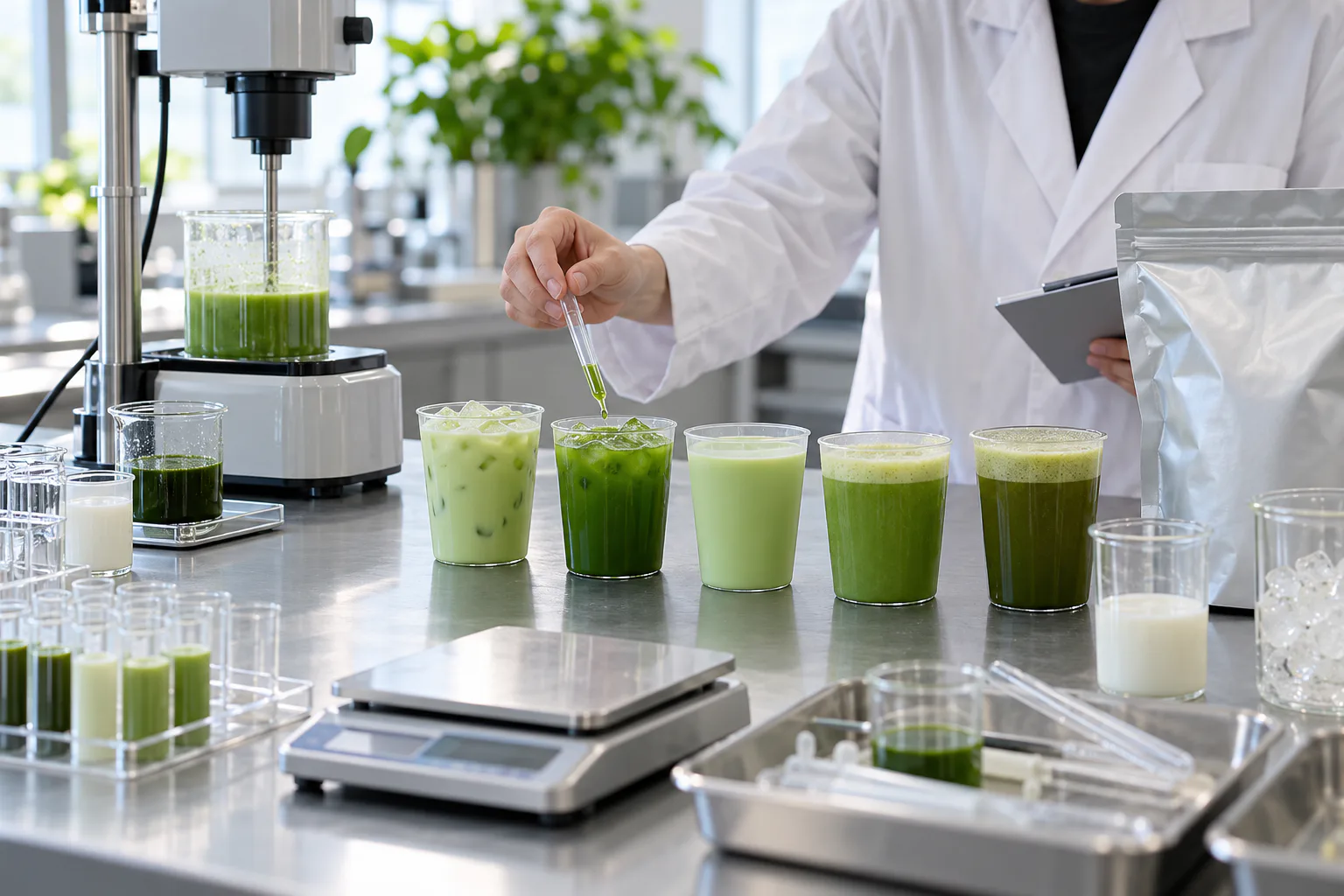
Step 1: Standardize juice and water
Use one juice lot or one documented standardized base for candidate comparison. Record Brix or soluble-solids measure, pH, titratable acidity and pulp condition where relevant. Use one water source. Natural juice variation can otherwise be mistaken for tea variation.
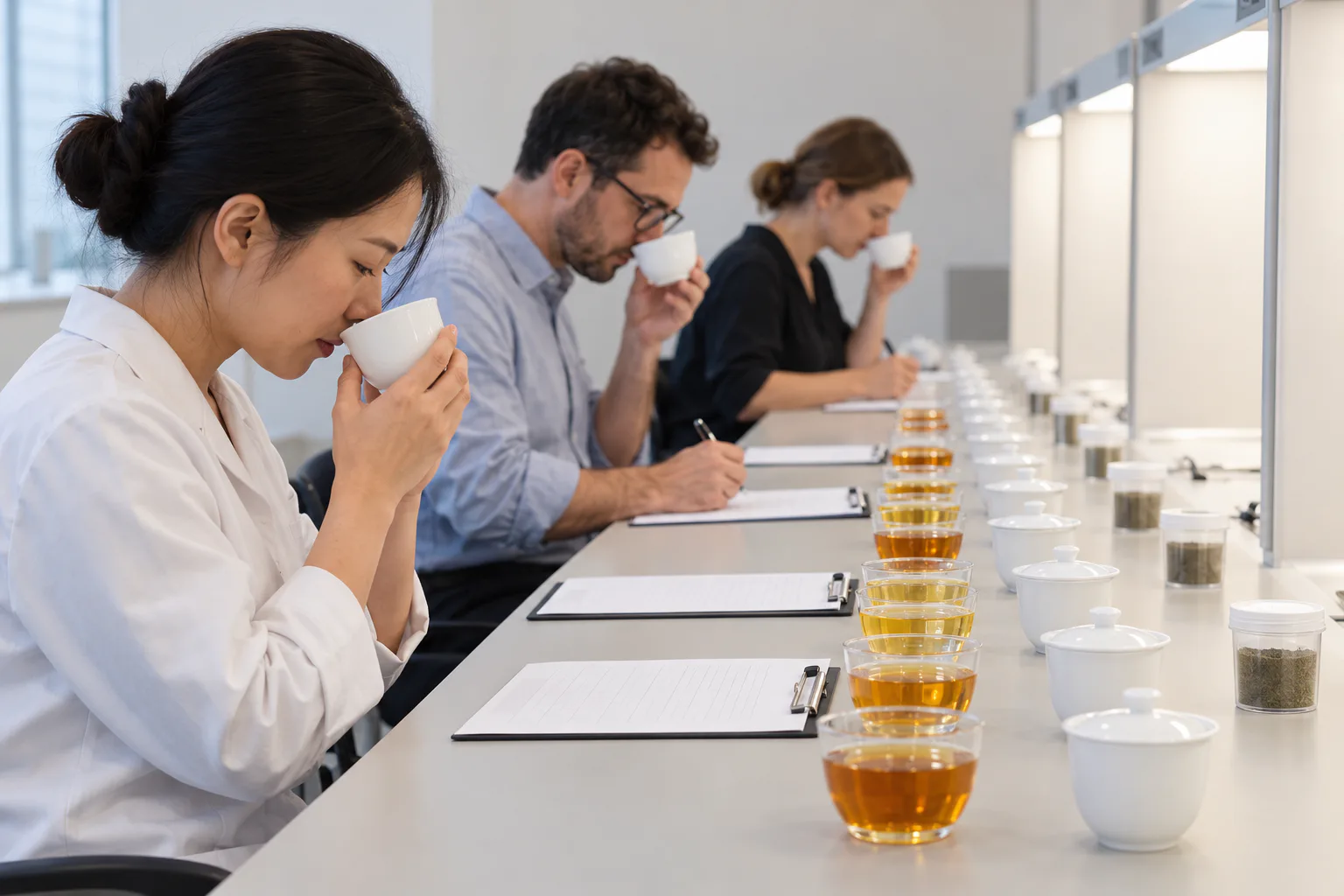
Step 2: Code tea candidates
Record commercial name, sample or lot reference, format and supplied documents. Use random codes for sensory work. Preserve retained samples according to internal policy.
Step 3: Prepare a no-tea control
The control shows the juice’s own heat, color and storage behavior. Keep batch size, mixing, temperature and processing the same.
Step 4: Standardize addition and mixing
Record powder mass, order of addition, liquid temperature, mixer, speed and time. If tea is pre-dissolved, record the water amount and account for dilution. Avoid excessive shear simply to make all samples look uniform; the process should be scalable.
Step 5: Evaluate the fresh beverage
At a fixed time and temperature, record:
- tea identity and fruit identity;
- aroma balance;
- sweetness, acidity, bitterness and astringency;
- pH and titratable acidity where appropriate;
- color, haze, pulp distribution and sediment;
- mouthfeel and aftertaste; and
- visible foam or surface ring.
Use coded samples and agreed vocabulary.
Step 6: Apply the intended process
Run the qualified thermal and filling concept. Record time–temperature history, cooling and holding. Compare pre- and post-process aroma, color and physical behavior. A bench hot-water bath is comparative only unless it represents the validated process.
Step 7: Test the intended package
Package color, light barrier, closure and headspace can influence the consumer view and storage behavior. Use the actual or representative package for a qualified stability program. Include protected controls when investigating light.
Step 8: Confirm at pilot scale
Scale changes tank geometry, mixing energy, hold time and transfer. Confirm the preferred tea and fruit system under representative conditions before commercial approval.
Interpreting common observations
Tea becomes more astringent after fruit addition
Compare pH, titratable acidity, sweetness and serving temperature. The effect may be perceptual or formulation-related. Do not assume the powder changed chemically without evidence. Screen dosage or tea profile while keeping the fruit base constant.
Fruit aroma hides the tea
Decide whether tea should be a lead note, supporting note or label cue. Test a different tea style before simply increasing dosage, which may add bitterness and color without solving the aroma balance.
Color fades or browns during storage
Review tea, juice lot, pH, oxygen, heat, light, package and temperature. Measure tea-free control and complete formula. Avoid attributing the change to one ingredient from visual inspection alone.
Sediment forms in the bottle
Identify pulp, tea particles or other precipitate using appropriate analysis. Whole-leaf tea and pulpy juice naturally differ from a clear instant-tea system. Define acceptable settling and resuspension for the product concept.
Results vary with juice season or supplier
Compare soluble solids, acidity, color, pulp and aroma in the incoming juice. A robust formulation may need a standardized juice specification or controlled adjustment by the beverage manufacturer.
The plant trial is cloudier than the bench sample
Check water, shear, heat, hold time, addition point and sampling. Compare retained ingredients and run a controlled crossover before blaming scale alone.
Selection table
| Project question | Evidence to collect | Avoid |
|---|---|---|
| Does the tea identity remain clear? | Coded sensory comparison in the complete juice | Smelling dry powder only |
| Is acidity controlled? | Finished pH and titratable acidity | Using water pH as finished pH |
| Is appearance acceptable? | Defined color, haze and sediment observations | Calling every natural cloud unstable |
| Does process change the profile? | Pre/post-process matched samples | Comparing different batches |
| Is the package suitable? | Real package and storage study | One sunny-window sample |
| Is procurement ready? | Named product, specification and traceability | Approving a generic category |
Procurement questions
- What is the exact tea type and product format?
- Which sample identifier and product-specific specification apply?
- Are carriers or added aromatic materials present?
- What handling and storage information is supplied?
- Which lot documents can be provided at the relevant stage?
- How will a commercial lot be linked to the approved sample?
- What change-notification expectations can be agreed?
- Which labeling and market questions require independent review?
Frequently asked questions
Which tea powder works best with fruit juice?
There is no universal best option. Match the tea type and format to the fruit, acidity, desired appearance, process and sensory brief, then compare named samples in one standardized juice base.
Can instant tea powder be added directly to juice?
It may be possible under a controlled process, but acidity, viscosity, pulp and temperature affect mixing. Test a scalable addition sequence and inspect for agglomerates or sediment.
Why does tea taste more astringent in citrus drinks?
Acidity can change astringency perception, while citrus aroma and sweetness also alter balance. Evaluate pH, titratable acidity and the complete sensory system rather than assuming one cause.
Is matcha suitable for fruit beverages?
It can fit an intentionally opaque whole-leaf concept. Test wetting, green color, pulp interaction, mouthfeel and sediment. Do not expect it to behave like soluble instant tea.
Can tea and berry color remain stable together?
Stability depends on pH, oxygen, light, heat, ingredients and package. Use controlled color and storage trials; do not promise stability from a fresh sample.
Does juice make the beverage microbiologically safe?
Acidity alone is not a safety validation. The manufacturer must design and validate the complete process, formula, package and shelf life with qualified specialists.
Should the fruit or tea be added first?
The suitable sequence depends on powder format, juice base and equipment. Compare documented scalable sequences and validate the selected process.
Conclusion
Tea powder selection for fruit beverages requires a controlled complete-formula trial. Standardize juice and water, define the visual and sensory target, measure acidity appropriately, and compare samples through heat, package and storage. Connect the preferred result to a named tea product and its documentation rather than approving “tea powder” as a generic category.