Introduction
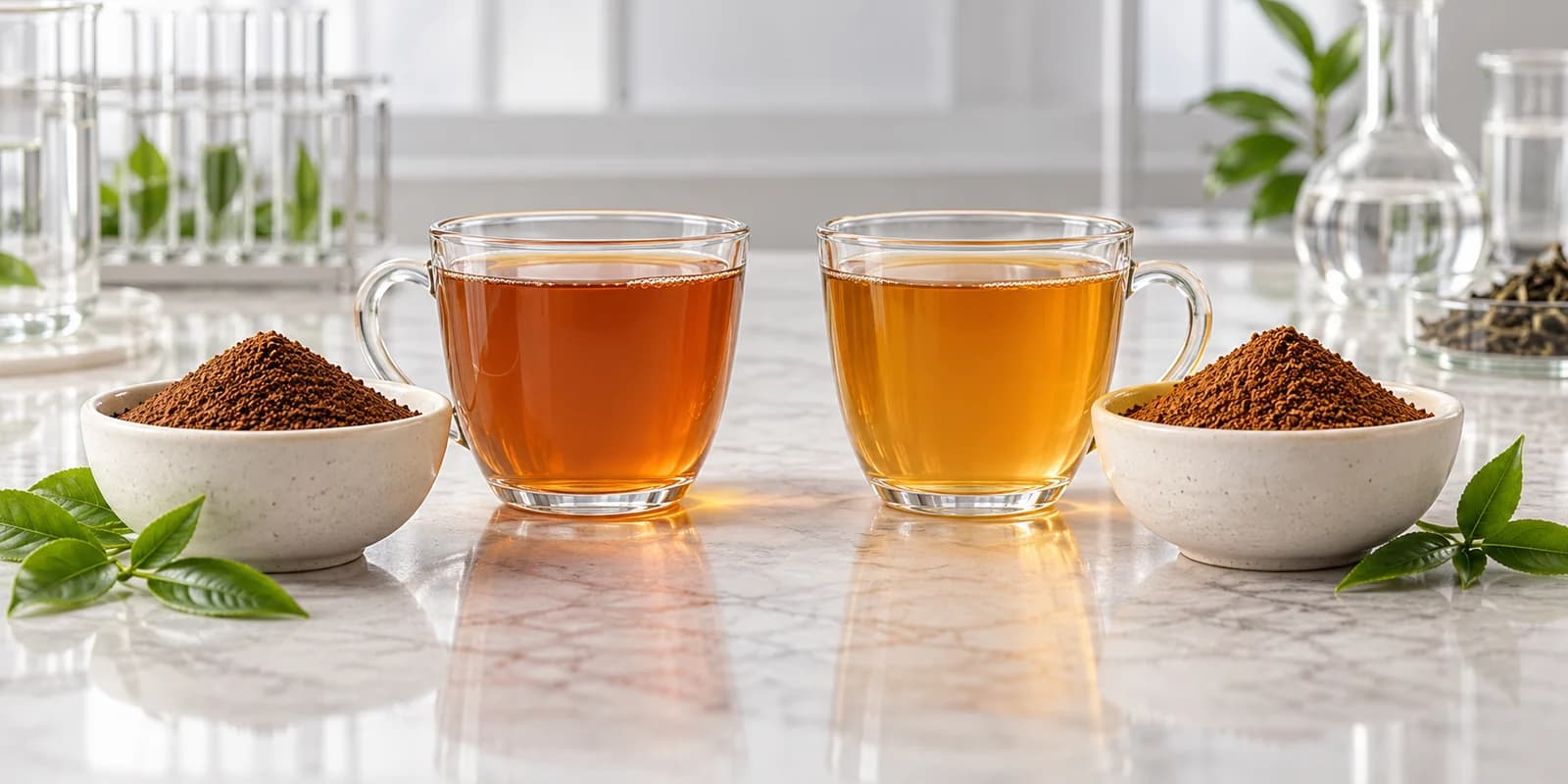
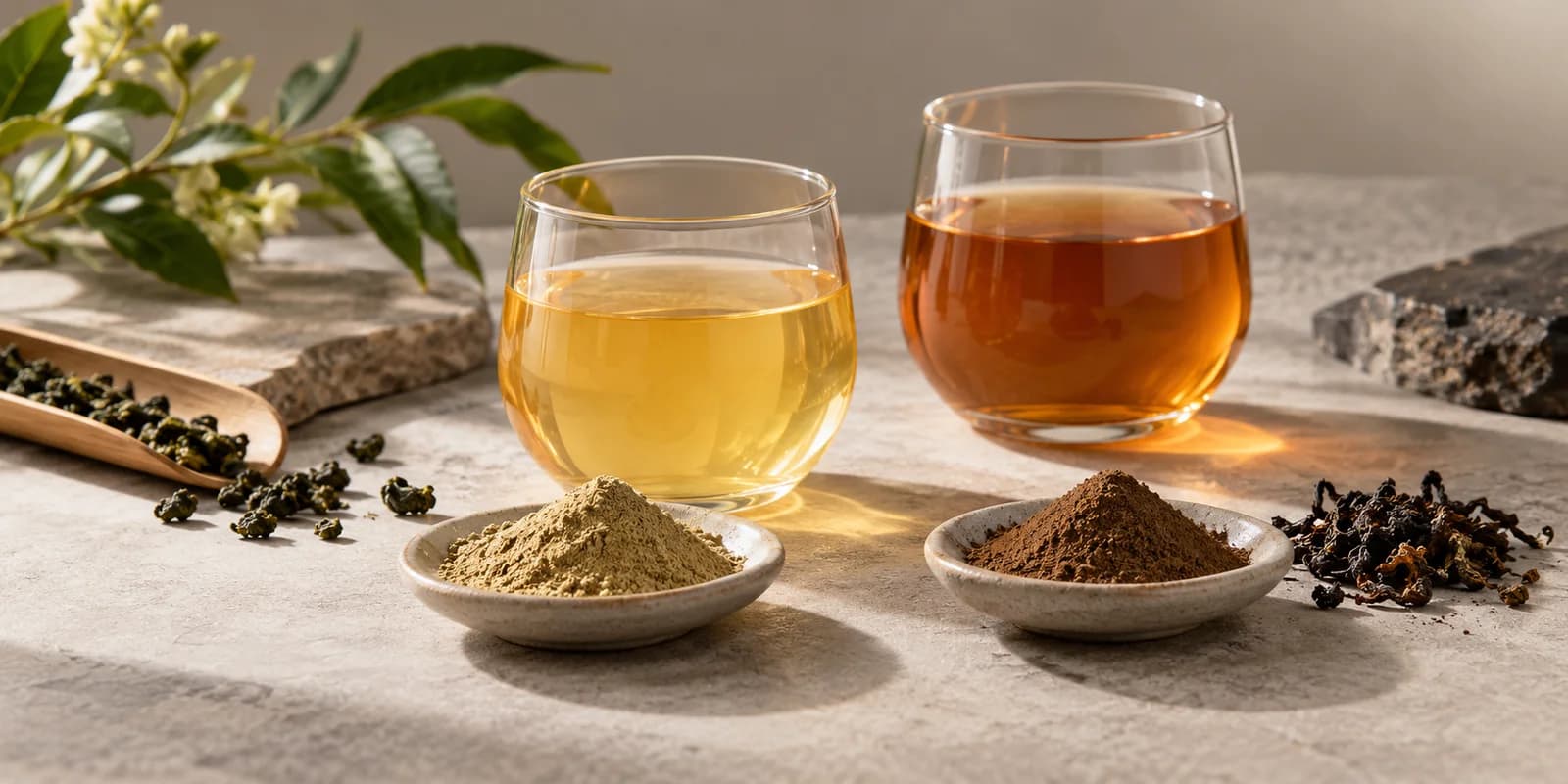
Oolong is not one flavor. Its sensory range can include fresh floral, fruity, creamy, honey-like, roasted or caramel-like directions, depending on cultivar and processing. “Oolong tea powder” can also mean an instant extract, milled leaf powder or a preparation with other components. A buyer who requests only a “strong oolong” sample may receive products that solve very different formulation problems.
Short answer: Select oolong tea powder by first confirming the exact tea and powder format, then defining the desired oxidation/roast direction and finished beverage. Compare coded candidates in water and the complete matrix for aroma, taste, color, dissolution or suspension, heat response and storage. Do not infer commercial performance from the dry powder, leaf origin or a generic oolong name.
This guide is educational and does not claim that Healsun offers every oolong style, origin or specification discussed.
What makes oolong a distinct tea category?
ISO 20716:2022 defines oolong tea and basic requirements for the leaf tea category; its public abstract also notes that the standard does not apply to scented or flavored teas. ISO 20715 classifies oolong among the six basic tea types. Public ISO material describes oolong as produced through processes including withering, tumbling or bruising, partial aeration/oxidation, enzyme inactivation, shaping and drying.
Those definitions help establish tea identity, but an instant oolong powder is a further-processed ingredient. ISO 6079 covers instant tea in solid form within its own scope. The buyer must connect the leaf-tea source description to the exact powder specification rather than assuming the leaf standard defines the finished powder.
Why oolong profiles vary
Peer-reviewed aroma research shows that cultivar and processing jointly influence oolong aroma. In the studied teas, fresh, floral and fruity attributes arose from interactions among multiple volatile compounds. This supports a practical sourcing rule: request sensory direction, not merely the word “oolong.”
Useful brief language may include:
- light, fresh and floral;
- ripe fruit and honey-like;
- medium-bodied with balanced roast;
- deep roasted and caramel-like; or
- clean tea base for milk, fruit or unflavored RTD use.
These terms need references. One team’s “roasted” may be another team’s “burnt,” while “floral” can mean orchid-like, jasmine-like or a general perfumed note.
Identify the powder format
| Format | What the beverage developer receives | Main questions |
|---|---|---|
| Instant oolong tea powder | Reconstitutable tea extract solids within product-specific definition | Dissolution, flavor, color, clarity, heat and storage |
| Milled oolong leaf powder | Fine leaf particles | Wetting, particle feel, suspension, sediment and color |
| Flavored or compounded powder | Tea-related preparation with other components | Exact composition, carrier, function and labeling |
| In-house oolong infusion | Liquid extracted by the beverage manufacturer | Leaf extraction, filtration, yield, water and consistency |
Water solubility should not be assumed from the word “powder.” Ask for exact identity and test the named sample.
Match the profile to the beverage
Clear or lightly colored RTD tea
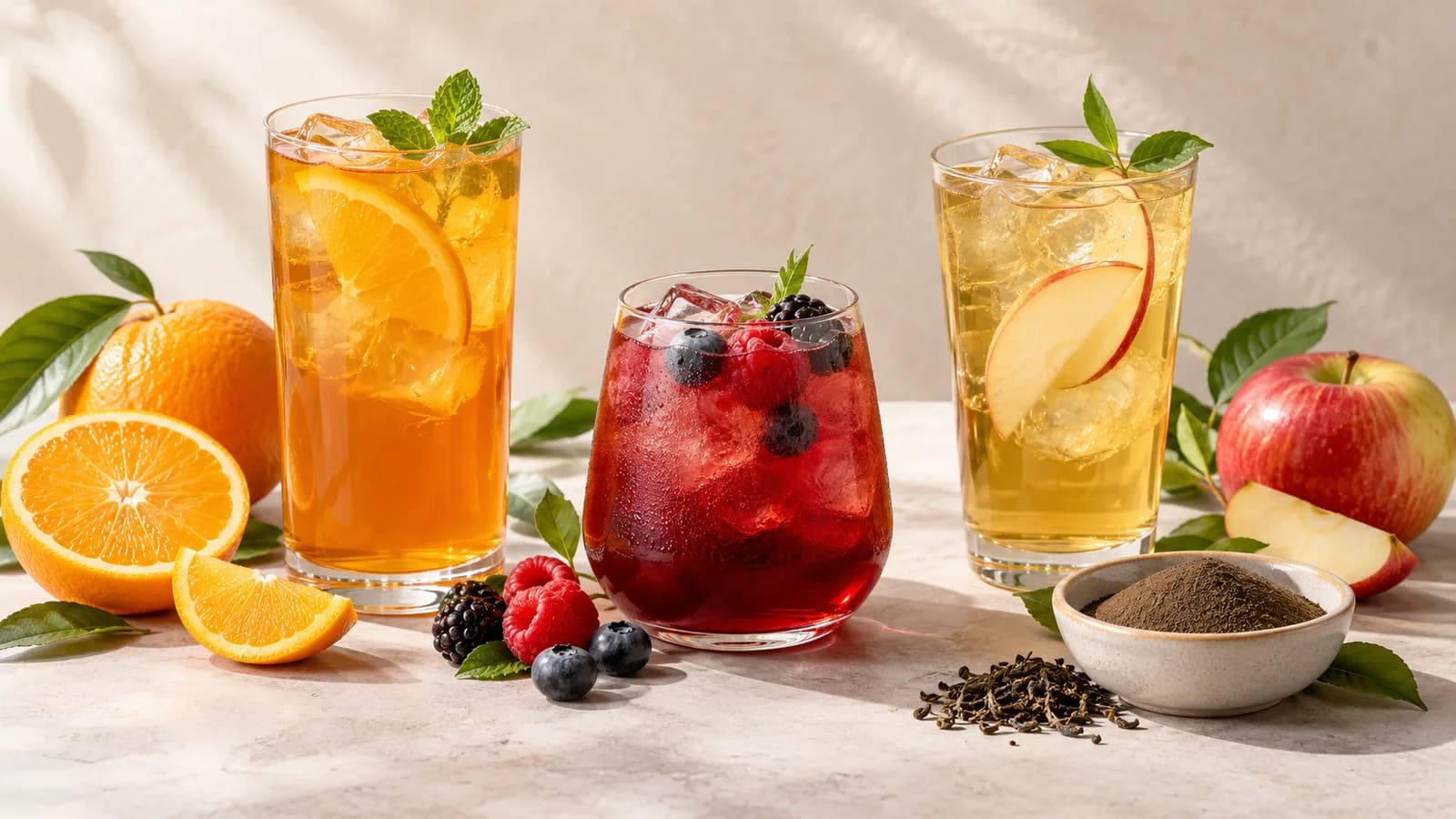
The target may favor a soluble format with controlled color and a recognizable aroma after heat. Evaluate clarity, haze, sediment, aroma retention and package/light effects. A delicate floral note can change during processing, so approve the processed beverage rather than fresh water only.
Milk tea or dairy beverage
Milk proteins, fat, sweetness and heat can soften or mask tea notes. Roasted oolong may remain more apparent in one base, while a floral oolong may fit another. Published milk-tea reviews show that tea–milk systems are complex and process-dependent; their study-specific ratios are not universal formulas.
Plant-based beverage
Oat, soy, pea and nut bases have different flavor, protein and mineral systems. Use the existing plant-based beverage evaluation framework and treat the oolong profile as the tea-variable layer. Do not transfer a dairy result directly.
Fruit or acidified beverage
Acid, fruit aroma and color can change oolong perception. A floral profile may complement some fruits and disappear behind others. Measure the complete beverage’s pH and physical behavior and validate the preservation process separately.
Dry mix or foodservice system
Check blend uniformity, segregation, reconstitution and hold behavior. A powder that performs in a high-shear laboratory mix may not fit a dispenser or spoon-stirred format.

Build a sourcing brief
Provide:
- finished beverage and destination market;
- instant extract, milled leaf or open-format request;
- light, medium or darker oxidation/roast direction using sensory references;
- desired floral, fruity, honey, roasted or caramel-like attributes;
- acceptable bitterness and astringency;
- target color, clarity or suspension;
- matrix, pH, sweetener and serving temperature;
- heat, filling, package and storage concept;
- documentation questions; and
- current-stage decision criteria.
Avoid requesting a named origin or cultivar unless traceability and sensory purpose genuinely require it. Never invent origin from an aroma impression.
Controlled sample evaluation
1. Verify identity and records
Record the sample name, supplier reference, lot or sample code, powder format and documents received. Ask whether flavoring or carrier materials are present. Keep sealed reference material when internal policy allows.
2. Create a water baseline
Use one documented water source, dosage, temperature, vessel, mixing method and time. Record dissolution or suspension, color, aroma, bitterness, astringency and aftertaste. The water baseline reveals character but is not the final application decision.
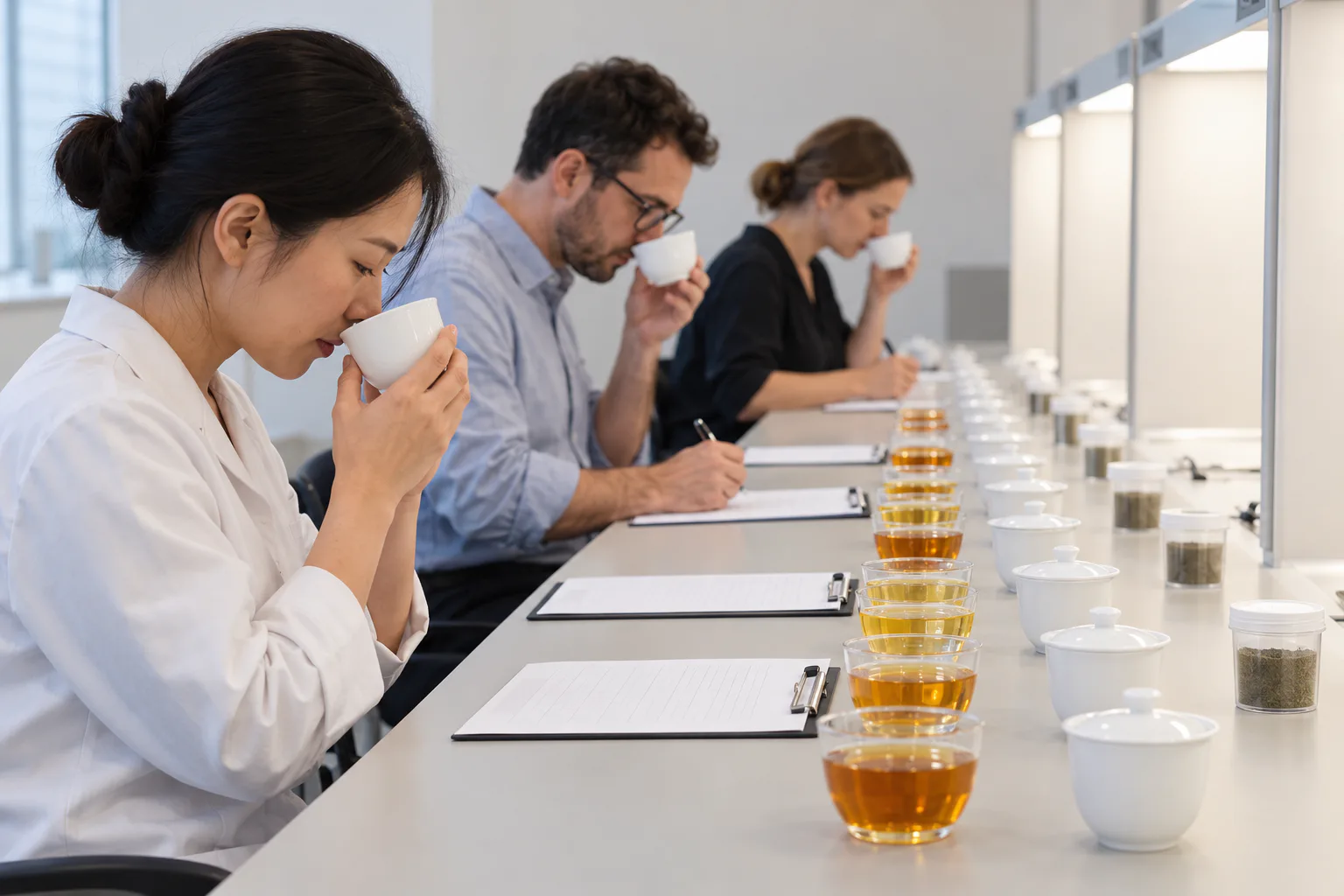
3. Use coded descriptive sensory work
Choose a short vocabulary appropriate to the brief. Research on oolong consumers and sensory wheels includes attributes such as floral, fruity, roasted, sweet, bitter, astringent and clean. Define each term for the panel and separate intensity from liking.
4. Test the complete formula
Use the same base lot and control across candidates. Record powder dosage, addition sequence, mixer, temperature and time. Compare tea identity, matrix balance, color, mouthfeel, sediment and surface behavior.
5. Apply the intended process
Process representative samples under qualified conditions. Record the time–temperature history, cooling and fill. Compare aroma and taste at the same serving temperature before and after processing.
6. Observe package and storage
Use the intended package in a qualified program. Track aroma, color, haze, sediment and flavor balance. Real-time evidence is needed for shelf-life decisions; accelerated work should be interpreted cautiously.
7. Confirm at pilot scale
Tank geometry, addition point, shear and holding differ from bench work. Retest the selected candidate under representative production conditions and keep traceability to the approved sample.
Interpreting common observations
The sample smells floral dry but weak in the drink
Dry headspace is not the finished application. Check dosage, water, serving temperature, matrix masking and heat. Compare another profile rather than assuming all floral oolongs behave the same.
Roasted character dominates milk tea
Decide whether roast should lead or support. Screen a lighter profile or lower dosage while checking whether oolong identity remains recognizable. Changing sweetness alone may create a different imbalance.
The beverage is more astringent than expected
Review dosage, pH, serving temperature, sweetener and protein interactions. Astringency does not identify oxidation degree or quality by itself. Use coded sensory work and the complete formula.
Color is darker after heat
Equalize sample temperature, then compare water, pH, oxygen, heat history and holding. A color shift is not automatically a safety issue or supplier failure; investigate against predefined acceptance criteria.
Sediment appears during storage
Confirm whether the product is a soluble extract or leaf suspension. Inspect process, concentration and other ingredients. Define acceptable settling and resuspension for the intended format.
Pilot aroma differs from the bench
Compare addition point, tank headspace, open holding, heat, cooling and package. Scale-up changes exposure and residence time. Repeat with retained material before concluding the tea lot changed.
Procurement checklist
- Exact product name, tea type and powder format.
- Product-specific specification and sample identifier.
- Declared carriers or aromatic materials, if applicable.
- Preparation, packing and storage information.
- Lot-related documents available at the relevant stage.
- Traceability from approved sample to commercial material.
- Change-notification expectations.
- Independent review of labeling, claims and destination-market suitability.
Frequently asked questions
What does oolong tea powder taste like?
Profiles vary widely. Depending on tea and processing, oolong can be fresh, floral, fruity, honey-like, roasted or caramel-like, with different bitterness and astringency. Evaluate the named sample.
Is oolong tea powder fully soluble?
Only if it is a soluble extract that performs under the test conditions. Milled leaf powders are suspensions. Confirm format and test at the intended concentration and temperature.
Is light-roast or dark-roast oolong better for milk tea?
Neither is universally better. The correct profile depends on milk base, sweetness, serving temperature and desired tea prominence. Compare coded samples in the complete formula.
Can oolong tea powder be used in RTD beverages?
It can be evaluated for RTD use. Test dissolution, aroma, color, pH, heat, package and storage under the actual process concept.
How is oolong different from green and black tea?
Oolong uses characteristic partial aeration/oxidation processing and occupies its own tea category. Its sensory range is broad; it should not be described only as “between” green and black tea.
Does roast level predict caffeine or solubility?
Not reliably. Caffeine and solubility require product-specific data and appropriate testing. Sensory roast language is not an analytical specification.
Can a leaf-origin standard define instant oolong powder quality?
It can help establish source-tea identity, but the instant powder is a further-processed ingredient requiring its own specification and application validation.
Conclusion
Oolong powder selection begins with identity and sensory direction. Confirm whether the product is an instant extract, leaf powder or preparation; define the intended floral, fruity or roasted profile; and test coded samples in water and the complete beverage through process and storage. Approval should remain tied to the exact sample and documents, not a generic oolong name.
References
- ISO 20716:2022 — Oolong tea — Definition and basic requirements
- ISO 20715:2023 — Tea — Classification of tea types
- ISO 6079:2021 — Instant tea in solid form — Specification
- Oolong aroma characteristics determined by processing and cultivar
- Sensory wheels for Taiwan specialty teas
- Process-induced interactions in milk–tea blends