Introduction
A powder that performs well in a laboratory cup may behave differently in a dispenser with fixed water temperature, short mixing time, narrow tubing and repeated service cycles. Ingredient selection therefore has to be linked to the equipment, beverage recipe and operating procedure.
Short answer: Validate instant tea powder in the intended dispenser by defining dose, water, temperature and serving target; then measure reconstitution and sensory consistency across repeated draws, start-up, holding and end-of-run conditions. Review equipment compatibility and cleaning with the equipment manufacturer and applicable foodservice requirements. Do not treat a bench-cup result as proof of field performance.
Define the dispensing system first
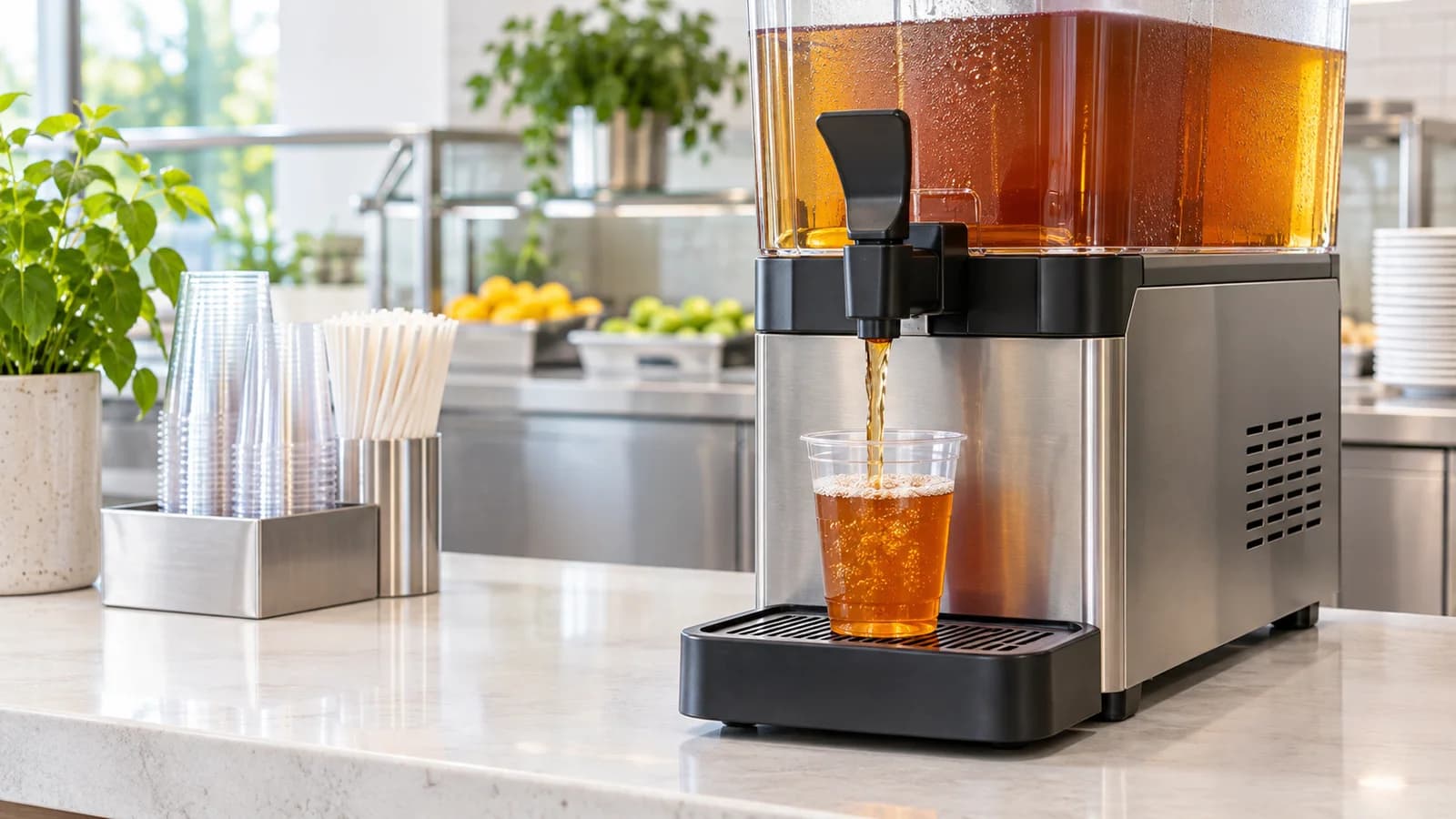
“Beverage dispenser” can describe different systems:
- powder-to-cup machines that meter dry ingredient and water;
- batch dispensers prepared from a powder concentrate;
- chilled recirculating units;
- vending machines with internal mixing chambers;
- manual foodservice urns or iced-tea dispensers; and
- multi-ingredient systems combining tea with sweetener or whitener.
The relevant tea-powder characteristics change with the system. Ask for equipment model, water-temperature range, nominal dose, mixing method, internal path, holding time, serving volume and cleaning instructions before judging ingredient fit.
Translate the beverage brief into measurable targets
Define serving size, tea strength, sweetness, milk or plant-base addition, desired color, serving temperature and whether the drink should be clear or opaque. Set acceptable dose variation and sensory consistency through the buyer’s internal process. If nutritional or label values depend on dose, include appropriate finished-product verification.
Do not use one universal tea-powder percentage. Equipment, tea identity and desired sensory profile differ. A useful trial begins with the named product’s information and a documented recipe range.
Key performance areas
Reconstitution within the equipment cycle
Observe whether powder wets, disperses and dissolves within the machine’s actual mixing time and temperature. Check the mixing chamber, cup and internal surfaces. A longer manual stir in a beaker is not equivalent to an automated cycle.
Dose consistency
Collect multiple consecutive servings and weigh the powder dose or finished beverage as appropriate. Include start-up, normal running and low-hopper conditions. Track average and variation rather than relying on one cup.
Sensory consistency
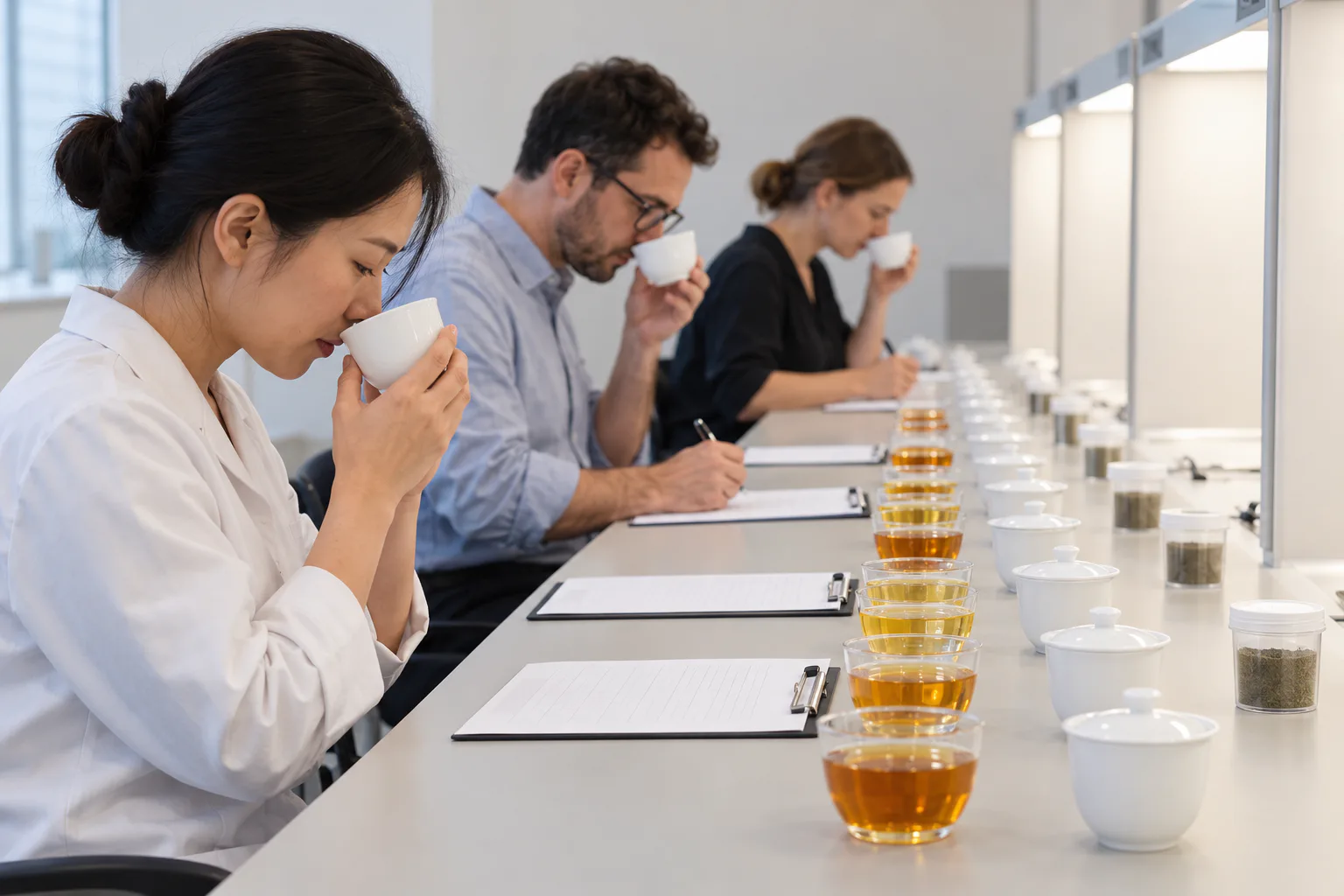
Compare coded servings for aroma, tea intensity, bitterness, astringency, sweetness, body and aftertaste. Evaluate at the intended drinking temperature. If the machine has several recipes, verify each independently.
Physical appearance
Record foam, undissolved particles, surface film, sediment and color under fixed conditions. Separate immediate reconstitution from changes that occur during holding.
Equipment path and residue
Inspect accessible areas according to the manufacturer’s procedure. Note powder accumulation, sticky deposits and residual beverage without making an unsupported cause claim. Ingredient, water, recipe, temperature and cleaning cycle may all contribute.
Holding and service pattern
If beverage is held after preparation, define the permitted time and temperature through qualified food-safety and equipment procedures. Compare the first serving, repeated draws, idle periods and the last serving within the approved operating window.
A controlled dispenser trial
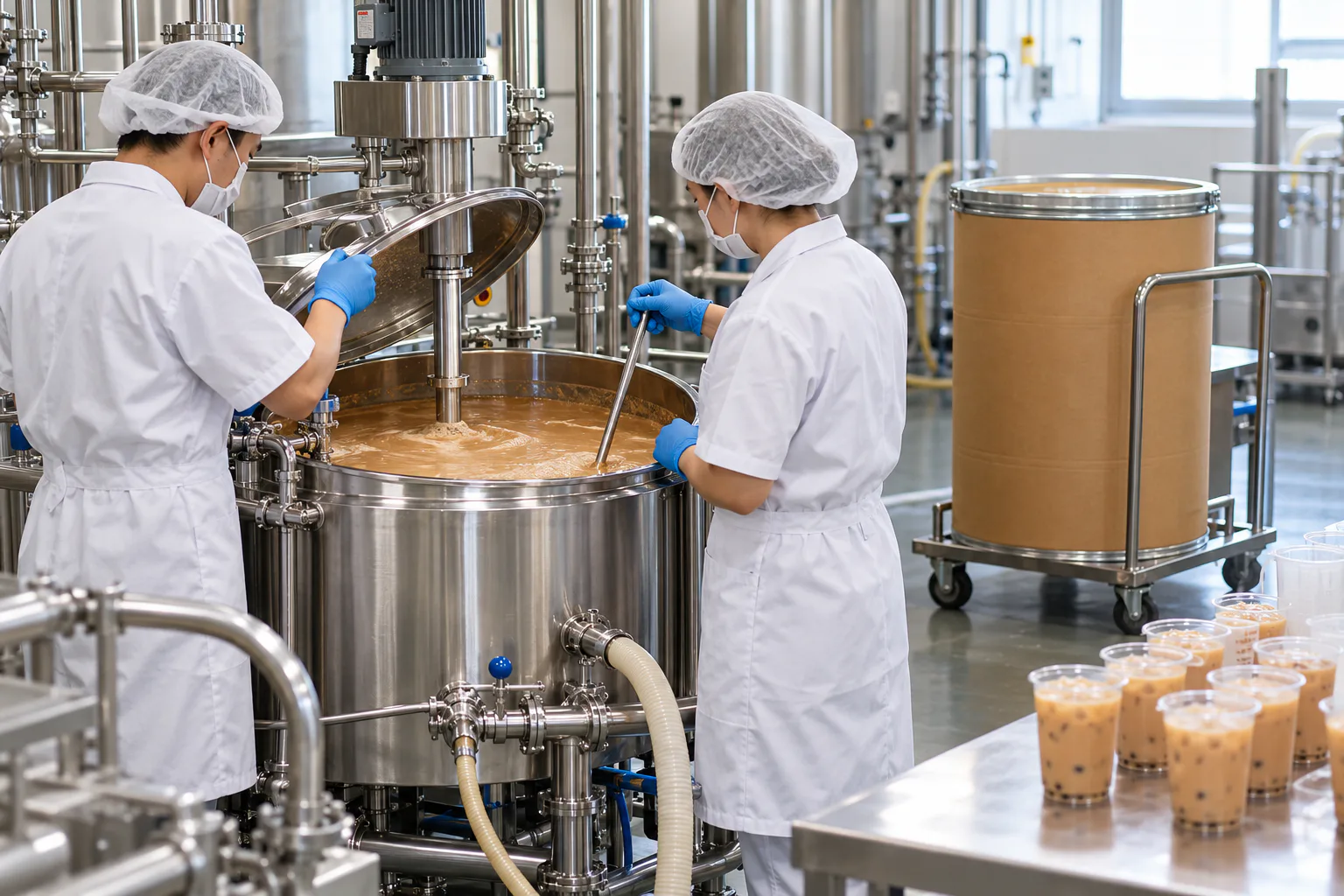
- Confirm equipment readiness. Use maintained equipment and current manufacturer instructions.
- Characterize the water. Record source, treatment, temperature and relevant routine measurements.
- Record ingredient identity. Link tea powder and other components to sample or lot codes.
- Calibrate dose and volume. Verify delivered powder and water rather than relying only on display settings.
- Run a defined start-up. Record priming or flushing steps required by the equipment procedure.
- Collect a serving sequence. Sample enough consecutive drinks to observe variation.
- Add an idle-period check. Use a documented interval that reflects intended service.
- Inspect and clean. Follow approved disassembly and cleaning procedures; record residue observations neutrally.
- Repeat on another day or refill. Reproducibility matters more than one successful run.
- Approve the complete system. Ingredient, recipe, equipment, water and operating procedure should remain linked.
Cleaning and food-contact considerations
The FDA Food Code is a model used by U.S. jurisdictions rather than a universal operating manual. Its equipment chapter addresses food-contact surfaces and beverage dispensing components, while the accompanying annex discusses sanitation design concerns. The applicable rules and cleaning frequency depend on jurisdiction, equipment, beverage and manufacturer instructions.
For buyers, the practical step is to obtain the current equipment cleaning procedure and confirm that the intended formula can be operated within it. Do not invent a cleaning frequency from ingredient marketing. Escalate food-safety and regulatory questions to qualified personnel.
How to compare candidate powders fairly
Use the same machine, maintenance state, water, recipe basis and collection sequence. Clean and reset according to the approved procedure between candidates. Randomize sensory samples where practical. If candidates require different settings, run a first phase at common conditions and a second optimized phase, clearly labeling both.
Compare total system fit:
| Criterion | Evidence |
|---|---|
| Reconstitution | Cup and mixing-chamber observations under fixed cycle |
| Dose repeatability | Repeated mass or volume checks |
| Sensory profile | Coded evaluation at serving temperature |
| Appearance | Fixed-light photographs and defined observations |
| Idle recovery | Serving results before and after defined idle period |
| Cleaning | Neutral residue and clean-down record under approved procedure |
| Documentation | Product identity, preparation guidance and applicable records |
Plan field verification without turning it into an uncontrolled experiment
After pilot approval, a limited field verification can confirm whether trained operators can repeat the defined setup under normal service. Select sites and equipment deliberately, document water and maintenance status, and use an approved recipe. Do not change dose, cleaning or holding instructions informally from one site to another.
Collect structured observations instead of relying only on comments such as “too weak” or “works well.” A simple form can capture machine model, date, powder code, refill time, measured serving volume, temperature, appearance and sensory notes. Any customer or employee information should be handled under the organization’s privacy rules and kept out of public marketing unless authorized.
A field issue should trigger evidence collection, not blame. Preserve relevant records, confirm the equipment state and reproduce the observation under controlled conditions where possible. Do not publish an isolated complaint as proof of ingredient or machine failure.
Build an operating window
The approved result should state the conditions under which performance was demonstrated. An operating window may cover water temperature, delivered dose, serving volume, permitted idle time, hopper range and cleaning procedure. It should be based on actual validation and reviewed by the responsible technical and food-safety teams.
Avoid setting a window so broad that it was never tested. Also avoid presenting one exact set point as the only possible condition when normal equipment variation is expected. The objective is a range that is both repeatable and supported by evidence.
When a new machine, water treatment, recipe or package is introduced, assess whether revalidation is needed. A documented change review is more reliable than assuming that a previously approved ingredient will behave identically in every system.
Documentation for handover and training
Operational handover should identify the approved ingredient and recipe, calibration checks, start-up and shutdown steps, cleaning instructions, observation limits and escalation route. Use the equipment manufacturer’s current documentation and site-approved procedures rather than copying generic instructions from a marketing article.
Training should include what normal performance looks like and which observations require action. Operators should not be asked to diagnose chemistry or food safety from appearance alone. Their role is to follow the procedure, record deviations and escalate through the defined system.
Common troubleshooting observations
Weak first serving
Review priming, water temperature, dose delivery and any retained water in the path. Repeat the defined start-up rather than adjusting the ingredient immediately.
Strength changes as the hopper empties
Check delivered powder mass across hopper levels and inspect flow under safe equipment procedures. Recalibrate or assess handling behavior with the equipment provider.
Powder remains in the mixing chamber
Review addition point, water contact, mixing energy, cycle time and cleaning state. Compare a controlled preparation outside the machine to separate ingredient reconstitution from equipment constraints.
Foam varies between cups
Record water pressure, temperature, mixing cycle, formula and cup condition. Foam is a system observation, not enough evidence to assign cause to a supplier.
Tea flavor changes during holding
Compare time-zero and held samples under the approved operating window. Consider temperature, oxygen exposure, formula and equipment path, then validate any adjustment.
Procurement questions
- What dispenser type and service pattern will be used?
- What water temperature and mixing time are available?
- Is dosing volumetric or gravimetric?
- What tea type and sensory target are required?
- What preparation guidance is available for the named sample?
- Which documentation is needed for the destination market?
- Who owns equipment calibration, cleaning and operator training?
- How will an approved sample and recipe be controlled after launch?
Frequently asked questions
Is cold-soluble tea powder always best for a dispenser?
Not automatically. Solubility classification may be relevant, but dispenser temperature, mixing energy, recipe and service pattern still require testing. Select against the actual equipment cycle.
Can the machine setting replace ingredient weighing?
No. Settings should be verified by delivered mass or volume during calibration and routine control. A display value is not independent evidence of dose.
How many cups should be tested?
There is no universal number. The validation plan should represent start-up, steady operation, idle periods, hopper level and the decision risk. Qualified quality personnel should define the sample plan.
Does FDA specify one cleaning schedule for every dispenser?
No. Applicable requirements depend on equipment, food-contact surfaces, manufacturer instructions and jurisdiction. The FDA Food Code is a model code, and local adoption can differ.
Can one approved powder work in every machine?
Do not assume so. Water, dosing, mixing and internal geometry differ. Validate each materially different system or establish justified equivalence.
Conclusion
Dispenser suitability is a system result. Define the equipment and serving target, verify delivered dose and water, test repeated servings and idle periods, and connect ingredient approval to cleaning and operating procedures. A successful cup is useful evidence only when its conditions can be repeated.