Introduction
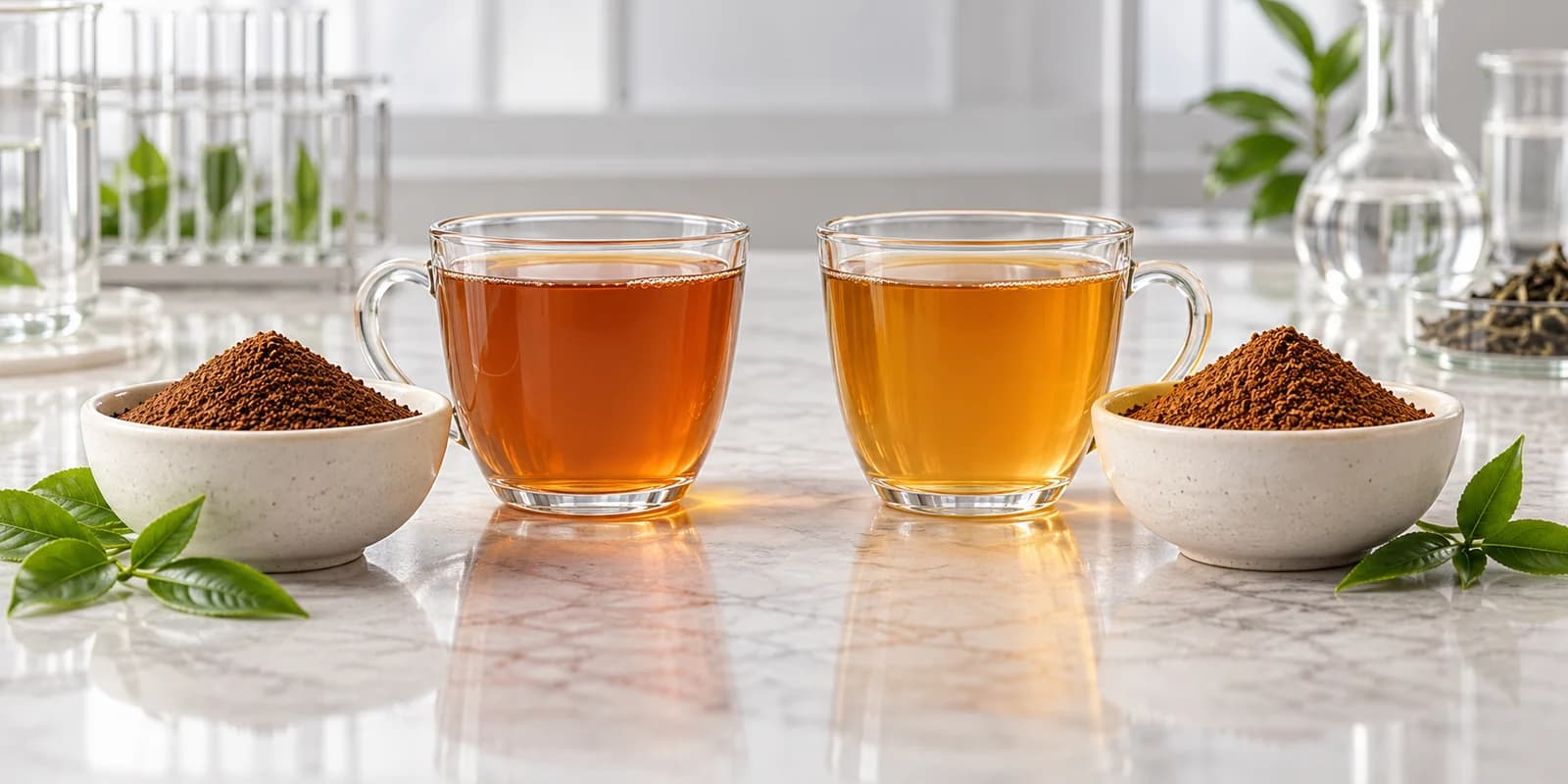
Color is often the first tea attribute a buyer or consumer sees, but it is also one of the easiest to measure inconsistently. A sample viewed in a narrow glass under warm office lighting can appear different from the same beverage in its retail package under a cool display lamp. Process water, pH, heat, oxygen, light and storage may also change the beverage itself.
Short answer: Evaluate tea color stability by defining a visual target, measuring a fresh reference under controlled conditions, and following the same coded formulation through heat, filling, light and storage in the intended package. Use consistent visual assessment together with instrumental color or turbidity measurements when the decision warrants them. A single photograph or one fresh beaker is not evidence of commercial color stability.
This article provides a neutral development framework. It does not prescribe shelf life, package selection or universal acceptable color values.
What “tea color” includes
Color discussions often combine several different observations:
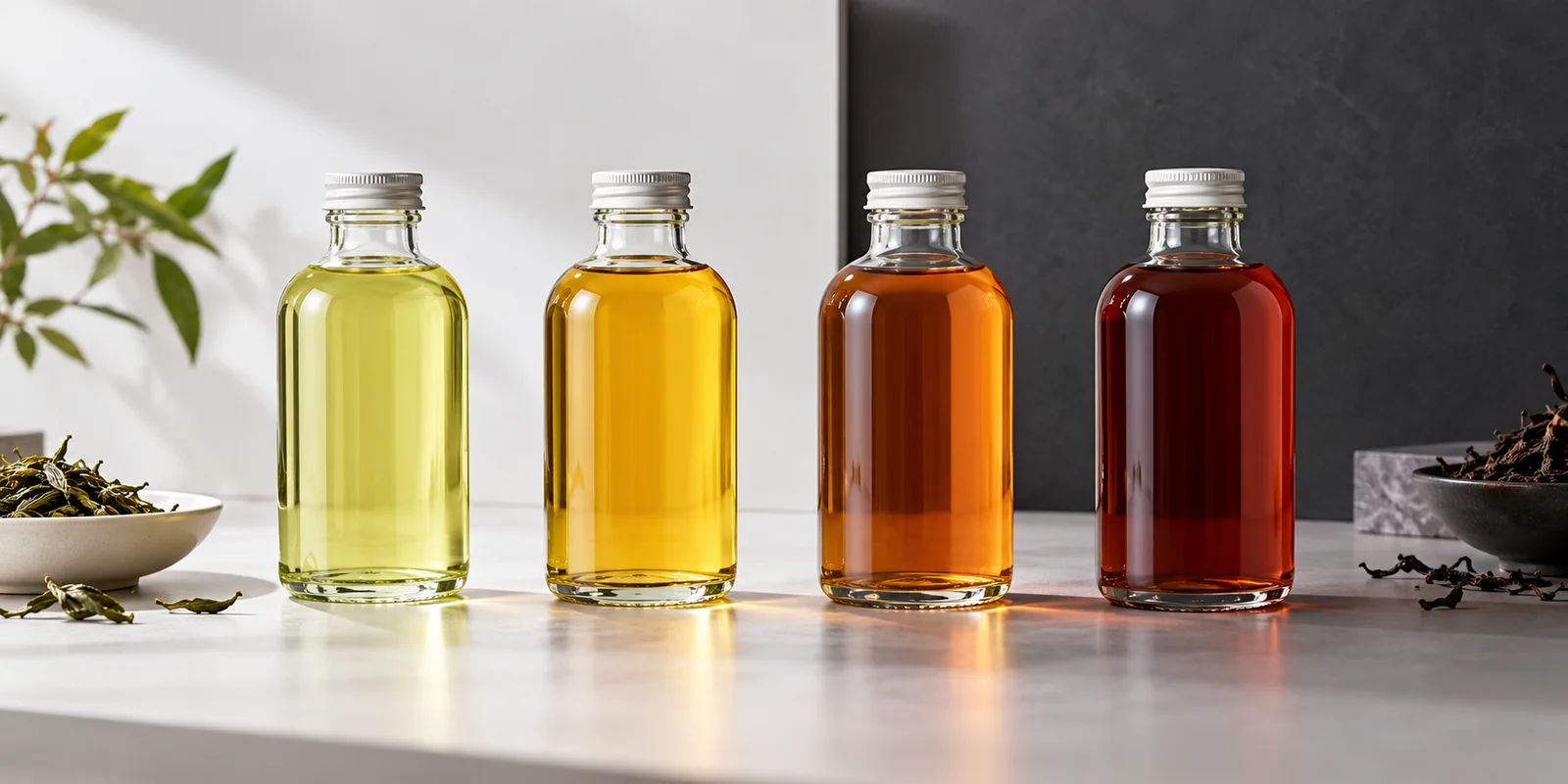
- hue: whether the beverage appears green, yellow, amber, red or brown;
- lightness: how light or dark it appears;
- chroma or saturation: how vivid or muted the color appears;
- clarity or haze: light scattering that can make color look pale or opaque;
- sediment: material that changes the visual gradient over time;
- surface ring or film: a separate visual feature; and
- package effect: color introduced or filtered by bottle, can, label or background.
Describe each separately. “Too dark” may actually mean higher haze, a thicker optical path or a different background.
Why tea color may change
Tea color comes from multiple compounds and their processing history. In a finished beverage, visible change can reflect:
- variation in the named tea ingredient or dosage;
- water minerals and pH;
- acidification or buffering;
- thermal processing and cooling;
- oxygen exposure during mixing, transfer or headspace;
- light exposure through the package;
- interactions with juice, sweeteners, flavors, proteins or minerals; and
- time and storage temperature.
Recent peer-reviewed work on green-tea beverages identifies raw material, water, processing, light, oxygen, temperature and storage duration as relevant variables in color change. That evidence supports a staged test design, but its specific mechanisms and rates should not be generalized to every tea type or formula.
Define the color target before selecting tea
Write a target that the development team can evaluate. Include:
- intended tea type and product identity;
- fresh color reference;
- clear, translucent, naturally cloudy or suspended appearance;
- acceptable direction of change during the development stage;
- intended package, label window and serving vessel;
- display and storage lighting concept;
- comparison background and illumination; and
- responsible decision-makers.
Do not ask a supplier for “stable bright green” without providing the matrix and process. A green whole-leaf suspension, a clear green-tea extract and a flavored beverage have different visual systems.
Visual assessment: control the viewing conditions
Human vision remains essential because consumers see the finished package, not only an instrument value. However, visual assessment needs controls.
Use the same:
- sample volume and optical path;
- transparent vessel or actual package;
- background, preferably defined neutral white and black panels where useful;
- illumination and viewing location;
- sample temperature;
- time after mixing or opening; and
- sequence or randomized sample codes.
Photographs can document gross differences, but camera auto-exposure, white balance, screen calibration and compression can distort color. Include a defined color reference only under an approved imaging method, and never use an edited marketing photo as analytical evidence.
Instrumental color measurement
Understanding CIELAB
The CIE 1976 L*a*b* color space represents color with three coordinates: L* for lightness, a* along a green–red axis and b* along a blue–yellow axis. Color-difference values can summarize the distance between measurements. The CIE standard defines calculation procedures; it does not establish a universal pass/fail limit for tea beverages.
An instrumental program should specify illuminant, observer, geometry, cell or package, path length, temperature and sample preparation. Measurements from different instruments or containers should not be merged without method comparison.
Color difference is not the same as consumer difference
A numerical difference may be measurable but not important in the intended package, while a small mean value can hide an objectionable shift in one direction. Build internal acceptance criteria from sensory and commercial evidence rather than borrowing a generic ΔE threshold.
Haze and turbidity need separate attention
Color instruments can be affected by scattering. If haze is a key attribute, measure it using an appropriate method and report it separately. Allowing sediment to settle for one sample but not another invalidates the comparison.
A staged color-stability protocol
Stage 1: Verify the tea sample and fresh reference
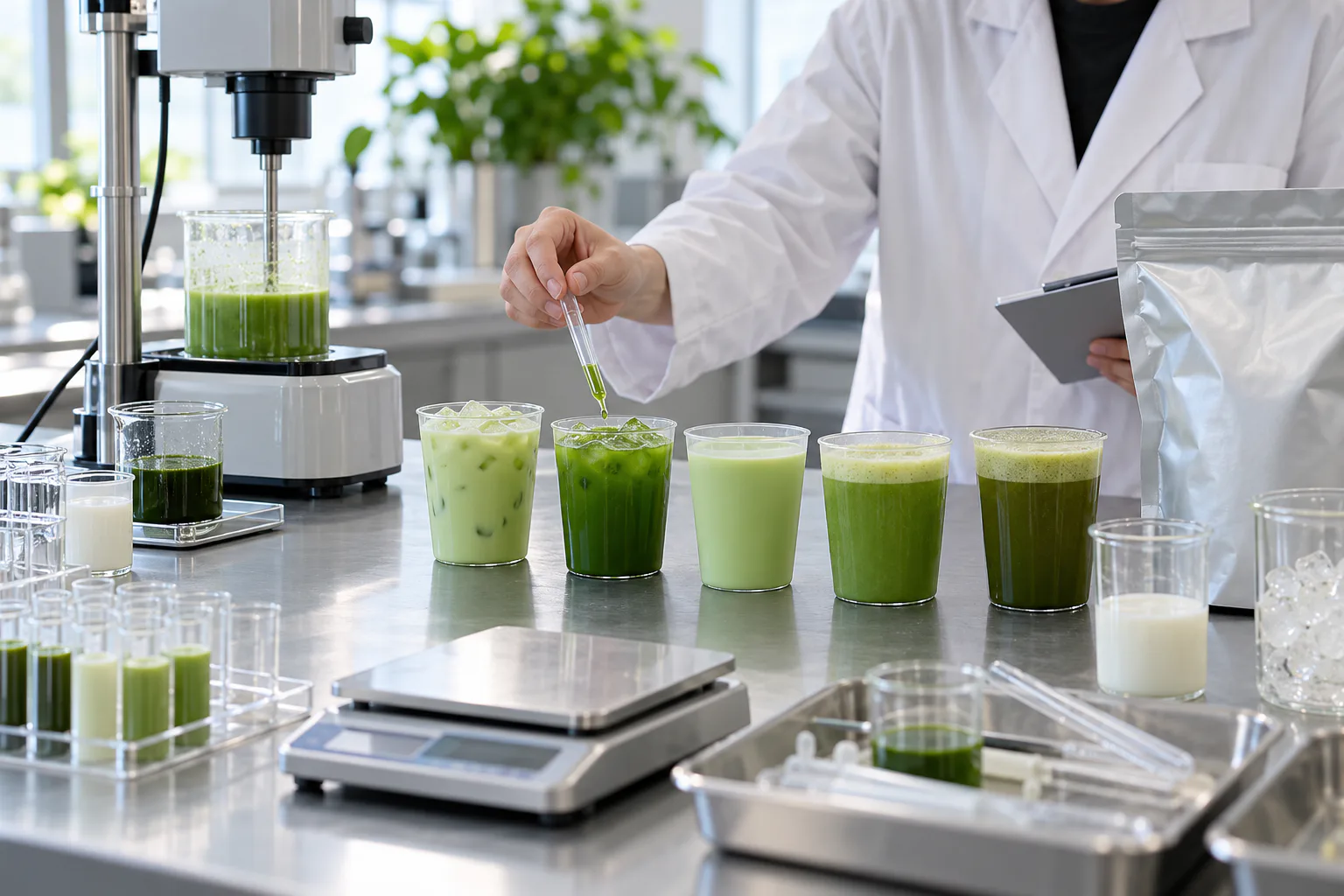
Record commercial name, sample or lot identifier, product format, receipt date and supplied documents. Prepare the tea using one documented water source, concentration, temperature, mixing method and time. Create an unprocessed fresh reference and photograph it only under the controlled imaging setup.
Stage 2: Compare water and pH
Water chemistry can influence tea appearance. Use one standard water for ingredient selection, then compare representative production water if needed. Record pH of the complete beverage, not only the water. When acid is added, record amount, addition sequence and mixing.
Do not adjust several ingredients at once to chase a color target. A controlled water or pH experiment should hold tea, formula, process and package constant.
Stage 3: Compare before and after heat
Sample the same batch before and after the qualified thermal process. Record the actual time–temperature history, cooling and holding time. Measure at the same temperature; hot liquids can look different and may contain transient bubbles.
Describe the result neutrally: darker, more red, less green, increased haze or another defined change. Do not call a shift degradation or nonconformance unless the project has established that conclusion.
Stage 4: Examine oxygen and handling
Track mixing aeration, open holding, transfer, headspace and closure conditions. If dissolved oxygen is measured, record instrument, calibration and sampling point. A color change between two handling routes can justify further investigation, but it does not by itself prove an oxidation mechanism.
Stage 5: Test package and light
Compare the intended package with an appropriate protected control. Define the light source, intensity or exposure protocol with qualified specialists. A sunny-window demonstration is visually dramatic but not a controlled retail simulation.
Recent research on photo-induced fading in green-tea beverages illustrates that light-driven change can be chemically complex. Use that work to justify package/light testing, not to claim that one package will protect every formula.
Stage 6: Follow real-time storage
Choose time points and conditions appropriate to the intended distribution. At each point, inspect package integrity, mix or invert only if the consumer instructions require it, and measure samples consistently. Samples must pass the site's safety clearance before sensory evaluation.
Accelerated storage can help compare formulations or packages, but it should not be converted automatically into a commercial shelf life without a validated relationship to real time.
Design a useful experiment
Change one primary variable
If tea type, pH, heat and package all change together, the result cannot identify the cause. Use a screening design that separates variables or a statistically designed experiment reviewed by a qualified specialist.
Include controls
A no-tea formula can show background color change. A fresh reference provides a time-zero anchor. A protected package can support a light hypothesis. Controls should answer the stated question, not add unnecessary samples.
Use replicates
One bottle may reflect fill or measurement variation. Replication helps estimate repeatability and prevents an isolated package from driving the decision. The appropriate number depends on the method and risk.
Predefine the decision
State what happens after the test: select a tea sample, investigate water, adjust process, compare packages or continue storage. Collecting color numbers without a decision rule creates data but not evidence.
Troubleshooting common observations
The beverage is darker after heating
First equalize temperature and remove transient bubbles. Check concentration, water, pH, heat history and holding time. Repeat the controlled comparison. If the change is reproducible, determine whether it falls within the intended product identity before changing the formula.
Green tea fades under retail light
Compare a protected control in the same package and storage temperature. Review bottle and label light transmission with packaging specialists. Do not promise a fix based on one short exposure; package, formula and distribution all require validation.
Color differs between laboratory and plant
Exchange water and retained tea samples where practical, then compare equipment, dosage, addition sequence, heat and sampling time. Measure using the same cell or container. Site lighting alone can create an apparent difference.
A ring forms near the liquid surface
Record whether it is foam residue, suspended material or a surface film. Container surface, tea components, water hardness and other ingredients may contribute. Treat it as a neutral observation until investigated; do not imply contamination.
Instrument and panel disagree
Check sample presentation, instrument method and which visual attribute the panel notices. The instrument may report bulk color while the panel reacts to sediment, gradients or package interaction. Both can be correct within their scope.
Photos look different from the samples
Lock exposure and white balance, use consistent lighting and include an approved reference. Compare on a calibrated workflow where color accuracy matters. Marketing retouching should be kept separate from test records.
Ingredient and procurement questions
- What exact tea type and product format is the sample?
- Which sample identifier and specification apply?
- Is visible suspension expected for this format?
- What preparation and storage information is supplied?
- Which lot documents can be provided at the relevant stage?
- How will a later commercial lot be linked to the approved sample?
- What change-notification expectations should be agreed?
- Which finished-product color claims or label representations need market review?
Do not write a color guarantee into a purchasing document unless the method, sample, matrix and acceptance criteria are defined and agreed.
Frequently asked questions
What makes RTD tea change color?
Tea identity, water, pH, heat, oxygen, light, other ingredients, package, temperature and time can all contribute. A staged experiment is needed to identify the relevant variables in a specific beverage.
What is CIELAB color measurement?
CIELAB represents lightness and two opponent color axes. It supports numerical comparison under a defined method, but it does not provide a universal acceptable limit for tea beverages.
Is ΔE enough to approve tea color?
No. A color-difference value should be interpreted with hue direction, haze, sediment, package appearance and sensory relevance. Build product-specific acceptance criteria.
Why does green tea become less green after processing?
Heat, pH, oxygen and ingredient interactions may influence pigments and other tea compounds. Confirm the change with controlled pre- and post-process samples before assigning a mechanism.
Can opaque packaging prevent all color change?
It can reduce light exposure, but color may also change because of heat, oxygen, time or formulation. Package performance and the complete beverage need validation.
Should color be measured in the bottle or a laboratory cell?
The bottle shows consumer appearance; a defined cell often improves analytical repeatability. Many programs use both, with separate methods and purposes.
Can accelerated light testing predict shelf life?
It can compare sensitivity under defined conditions, but commercial shelf-life prediction requires a validated relationship to actual distribution and real-time results.
Conclusion
Tea color stability is a measurement and process-control problem, not a judgment from one photograph. Define the target, control visual conditions, use CIELAB and haze measurements appropriately, and follow the same formulation through water, pH, heat, oxygen, light, package and real-time storage. Connect every result to the exact tea sample and method before making a sourcing decision.
References
- ISO 6079:2021 — Instant tea in solid form — Specification
- CIE Colorimetry — Part 4: CIE 1976 L*a*b* Colour Space
- Elucidating the photo-induced fading mechanism in green tea beverages
- Identification and evaluation of colour change in rosemary and Biluochun tea infusions
- Tea film formation in artificial tap water