Introduction
Tea and chocolate can create a distinctive flavor combination, but adding tea powder to a fat-continuous confectionery system is not the same as dissolving it in water. A powder may contribute desirable color and aroma while also changing viscosity, particle perception, bitterness, astringency and tempering behavior. The result depends on the tea format, chocolate base, particle characteristics, addition point and storage conditions.
Short answer: Select tea powder for chocolate by first deciding whether the product needs a whole-leaf suspension, a powdered tea extract or another format. Screen candidates in the actual white, milk or dark chocolate base, then compare dispersion, particle feel, flow, tempering, color, aroma, bitterness and storage behavior. Results from a published tea-chocolate formula cannot be copied directly into another recipe.
This article provides a development framework, not a commercial formula, health claim or statement about Healsun manufacturing capability.
Decide what “tea powder” means in the recipe
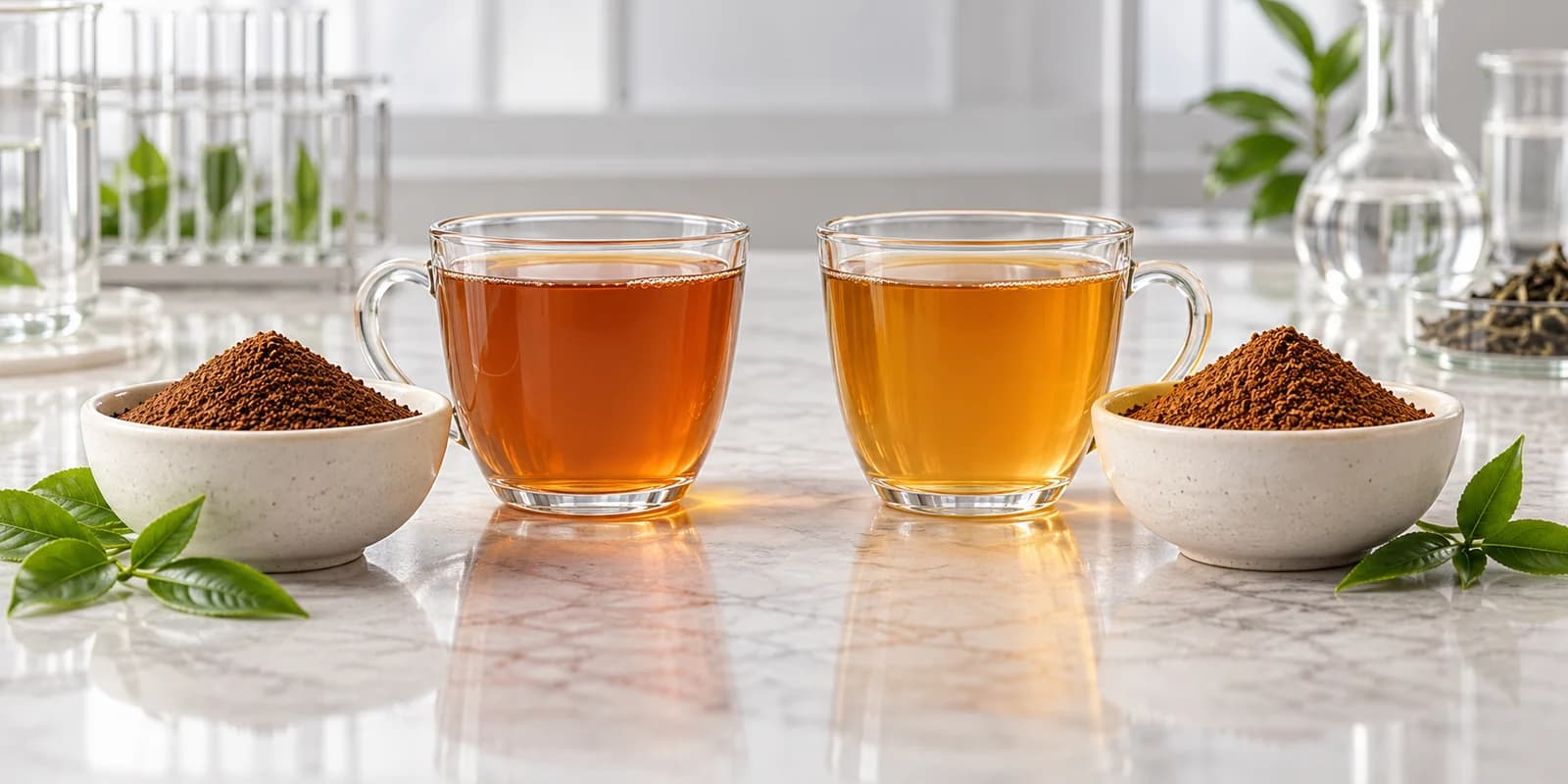
Chocolate developers may encounter matcha, finely milled tea leaf, instant tea extract powder or a flavored preparation. These materials behave differently.
- Milled whole-leaf powder contributes insoluble leaf particles, strong visual identity and a suspended solid phase.
- Instant tea powder is a soluble tea extract in solid form within a product-specific definition, but “soluble in water” does not mean it dissolves in cocoa butter.
- Tea extract preparation may have a carrier or composition that affects flow and flavor.
- Tea flavor serves a different primary function and requires separate identity and labeling review.
ISO 6079 defines a scope for instant tea in solid form, while ISO 20715 classifies basic tea types. Neither standard tells a chocolatier which ingredient will work in a specific recipe. Confirm the named sample's composition and intended application before testing.
Why chocolate is a distinct matrix
It is a fat-continuous system
Chocolate contains solid particles dispersed in a continuous fat phase. A hydrophilic tea powder does not behave as it would in water. Moisture introduction can cause severe processing problems, so any pre-dispersion concept must be designed by the confectionery team rather than borrowed from beverage practice.
Particle size affects mouthfeel
Research using chocolate as a model food shows that particle-size perception relates to the largest particles and individual oral sensitivity. Tea powder can add a new particle population to cocoa, sugar and milk solids. Fine appearance in the dry state does not guarantee a smooth finished mouthfeel.
The base changes flavor expression
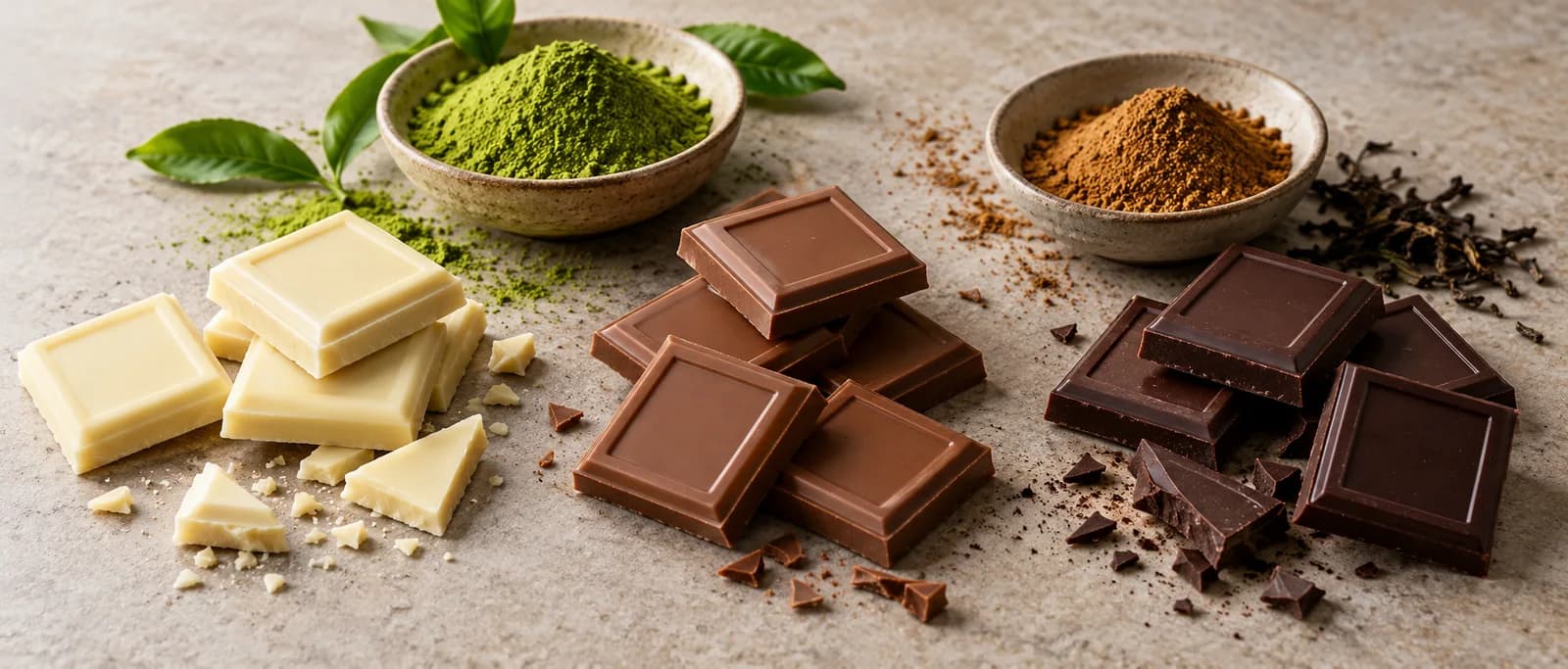
White chocolate provides a sweet dairy-fat background with little cocoa bitterness, so tea color and leafy notes can appear prominently. Milk chocolate adds cocoa and dairy notes. Dark chocolate may support roasted or bitter tea directions but can also make astringency harder to separate from cocoa character.
Tempering and flow are process-critical
Any dry addition changes total solids and may alter flow. The development team should monitor mixing, refining or conching strategy, temper response, depositability, mold release and finished snap under its validated process. Tea should not be assumed neutral because it is used at a small percentage.
What published research contributes
A peer-reviewed study of powdered yellow-tea extract in white, milk and dark chocolates found that tea addition influenced sensory characteristics and color, and the researchers used concentration screening before a longer storage comparison. That study is useful evidence that matrix and dosage matter. Its specific percentages, process and results belong to the tested materials and should not be adopted as universal recommendations.
Reviews of tea in foods likewise describe processing-driven trade-offs in sensory and functional properties. For commercial development, the transferable lesson is the method: screen a range, use controls, measure physical and sensory outcomes, and observe storage. Avoid copying a research formula without confirming ingredient identity, legal status and manufacturing feasibility.
Build an application brief
Include:
- white, milk, dark, compound coating or other confectionery base;
- tea type and exact format requested;
- intended color and visual uniformity;
- target flavor terms, such as grassy, floral, roasted or malty;
- acceptable bitterness and astringency;
- desired particle perception and texture;
- current refining, mixing, tempering and depositing route;
- inclusion of nuts, fruit, wafers or fillings;
- package and storage concept;
- destination-market and labeling questions; and
- the decision the sample trial must support.
“Bright green” or “strong tea” should be connected to a reference and test condition. Color seen under cool retail light can differ from color under warm production lighting.
A controlled bench screening plan
Step 1: Record sample identity
Document the commercial name, sample code, lot or supplier reference, tea format and supplied information. Keep whole-leaf powders separate from instant extracts. Store and handle samples according to product-specific instructions.
Step 2: Choose one chocolate base
Use one lot of the same base for the first comparison. Tea behavior in white chocolate should not be ranked directly against another candidate in dark chocolate. Prepare an unflavored control under the same heat and mixing history.
Step 3: Select a controlled dosage series
Choose a technically reasonable screening range based on the named material, product information and internal formulation constraints. The purpose is to find the sensory and processing boundary, not to reproduce a published percentage. Record actual mass and total batch mass.
Step 4: Standardize powder addition
Use the same powder temperature, addition point, mixing equipment, time and batch size. Observe floating powder, wall deposits, agglomerates and entrained air. Do not add water to improve dispersion unless the recipe and process are specifically designed for it.
Step 5: Observe flow and process response
Record the process measures normally used by the confectionery team. This may include temperature, qualitative flow, instrumental viscosity where available, depositing behavior and temper-meter results. A bench spoon test can compare obvious differences but is not a substitute for production rheology.
Step 6: Mold and condition samples consistently
Use the same mold geometry, cooling program, demolding time and storage condition. Unequal thickness changes cooling and sensory perception. Keep samples coded and protect them from uncontrolled odor pickup.
Step 7: Evaluate sensory and physical quality
At a fixed temperature, compare:
- surface color and gloss;
- visible specks and uniformity;
- aroma before and during eating;
- tea identity, cocoa and dairy balance;
- bitterness, astringency, sweetness and aftertaste;
- particle feel, melt rate and waxiness;
- snap, hardness and coating behavior where relevant; and
- any bloom-like change, while avoiding diagnosis from appearance alone.
Separate description from preference. A visible green speck may be acceptable in an artisan concept but not in a uniform coating.
Step 8: Advance to pilot and storage study
The preferred candidates should pass through representative refining, conching, tempering, depositing and packaging conditions as applicable. Real-time storage in the intended package is needed for commercial shelf-life decisions. Accelerated work can compare candidates but should not be translated automatically into a shelf-life claim.
How to interpret common observations
Tea flavor is weak in dark chocolate
The cocoa system may mask the selected tea profile. Compare a different tea direction or dosage series, but monitor combined bitterness and astringency. A stronger dry aroma does not guarantee better expression in fat.
White chocolate becomes too bitter or leafy
White chocolate exposes tea notes clearly. Reassess dosage, tea type and flavor balance. Increasing sweetness may mask one attribute while making the product unbalanced elsewhere; use a structured sensory screen.
The chocolate feels gritty
Confirm whether the sensation comes from tea particles, the base or process. Review particle-size distribution, refining strategy, agglomeration and addition point. Do not assume that an instant tea's water solubility eliminates particle effects in fat.
Flow changes after tea addition
Tea adds solids and may alter surface interactions. Check actual dosage, moisture exposure, particle properties, fat balance and mixing. Any formula correction should follow the confectionery team's validated approach and relevant labeling review.
Color varies between batches
First verify sample identity, dosage, base lot, process temperature, lighting and storage. Tea color can differ by type and processing, but variation should not be attributed to the supplier until preparation and records are checked.

Surface appearance changes during storage
Bloom, gloss loss and color change can have multiple causes involving temper, fat migration, temperature cycling, moisture and ingredients. Use qualified analysis; do not label a visual change as contamination or ingredient nonconformance without evidence.
Pilot-scale questions
Moving from a bowl to a line changes shear, residence time, heat exposure and transfer. Ask:
- Where will tea be introduced without dusting or local concentration?
- Can the existing refining or mixing step achieve the intended particle feel?
- Does added powder change pumpability or depositing?
- Are cleaning and allergen procedures affected by the complete recipe?
- How will color be checked under controlled lighting?
- Which retained samples connect the approved trial to production?
- Does the package protect the intended color and aroma?
These are general development questions, not a claim about any specific factory.
Procurement and documentation checklist
- exact product name and tea type;
- instant extract, whole-leaf powder or other preparation;
- ingredient or carrier information supplied for the candidate;
- product-specific specification and sample identifier;
- storage and handling instructions;
- lot-related documents available at the appropriate stage;
- traceability from approved sample to commercial material;
- change-notification expectations; and
- buyer review for labeling, claims and destination-market suitability.
The desired ingredient should be described by measurable application outcomes, not by unsupported quality adjectives.
Frequently asked questions
Which tea powder is best for chocolate?
There is no universal best powder. Suitability depends on tea identity, chocolate base, flavor target, particle feel, process and package. Compare named samples in one controlled recipe.
Can instant tea powder dissolve in chocolate?
Water solubility does not mean dissolution in cocoa butter. The powder will enter a fat-continuous system and should be evaluated for dispersion, particle feel and process behavior.
Is matcha better in white or dark chocolate?
White chocolate shows green color and tea notes more directly, while dark chocolate provides stronger cocoa bitterness and aroma. The better base is the one that fits the concept after controlled sensory and process trials.
Does tea powder affect tempering?
Any solid addition can alter the formula and process response. The effect depends on the material and dosage, so tempering and crystallization should be checked using the manufacturer's normal controls.
How can tea powder be dispersed without water?
The appropriate method depends on the equipment and recipe. Controlled dry addition, premixing with compatible formula components, refining or other confectionery operations may be evaluated by the manufacturer. Avoid improvised water addition.
Can published tea-chocolate dosages be copied?
No. A study's percentage applies to its tea extract, chocolate, equipment and objective. Use it to understand possible variables, then design a product-specific range.
How long should samples be stored?
Use short holds for screening and a qualified real-time program for commercial shelf life. The schedule should reflect package, distribution, quality and safety requirements.
Conclusion
Tea powder selection for chocolate is a matrix-specific decision. Define the ingredient format, use one chocolate base and control, screen dosage with consistent addition and conditioning, and evaluate both sensory quality and process response. Advance only the best candidates to representative pilot and storage work, then connect the result to the exact product documentation.
References
- ISO 6079:2021 — Instant tea in solid form — Specification
- ISO 20715:2023 — Tea — Classification of tea types
- The Effect of Yellow Tea Leaves Camellia sinensis on the Quality of Stored Chocolate Confectionery
- Oral somatosensory acuity is related to particle size perception in chocolate
- Processing, chemical signature and food industry applications of Camellia sinensis teas