Introduction
Adding tea to a plant-based beverage is not simply a matter of choosing a flavor and increasing the dosage until the drink tastes strong enough. Tea materials, plant proteins, oils, minerals, sweeteners and stabilizing systems can influence one another during mixing, heating and storage. A combination that looks uniform immediately after preparation may change after thermal processing, cooling or several days in the intended package.
For that reason, the useful sourcing question is not “Which tea powder is best for plant milk?” It is “Which tea ingredient performs acceptably in this specific base, process and sensory target?” The answer normally requires a defined brief, a controlled bench screen and a pilot trial in the actual formulation.
Short answer: Tea powder can be used in oat, soy, pea, almond and other plant-based beverages, but suitability depends on the tea format, base composition, pH, heat treatment, mixing method and desired appearance. Buyers should compare coded samples in the complete formula and monitor dispersion, color, aroma, astringency, sediment and phase behavior over a realistic evaluation period.
This guide describes a practical evaluation framework. It is general educational information, not a finished formula, a guarantee of stability or a substitute for validation by the beverage developer and relevant technical specialists.
Why plant-based beverage matrices need their own tea trial
A tea material that works in water does not automatically behave the same way in a commercial plant-based base. Water is useful for understanding the ingredient’s basic identity, but the finished beverage may contain proteins, carbohydrates, lipids, minerals, emulsifiers and hydrocolloids. These components change viscosity, interfacial behavior, light scattering and the way aroma and astringency are perceived.
Plant-based beverages also differ substantially from one another. A high-protein pea base is not an interchangeable substitute for an oat base with more starch-derived solids. Soy systems may have a different protein profile and heat response. Nut-based drinks can have their own oil phase and suspended material. Even two bases with the same front-of-pack description may use different ingredient systems and processing histories.
The result is a matrix-specific problem. A buyer can use the same evaluation framework across projects, but should not transfer a dosage, mixing sequence or stability conclusion from one base to another without testing.
Tea format is the first decision, not a minor detail
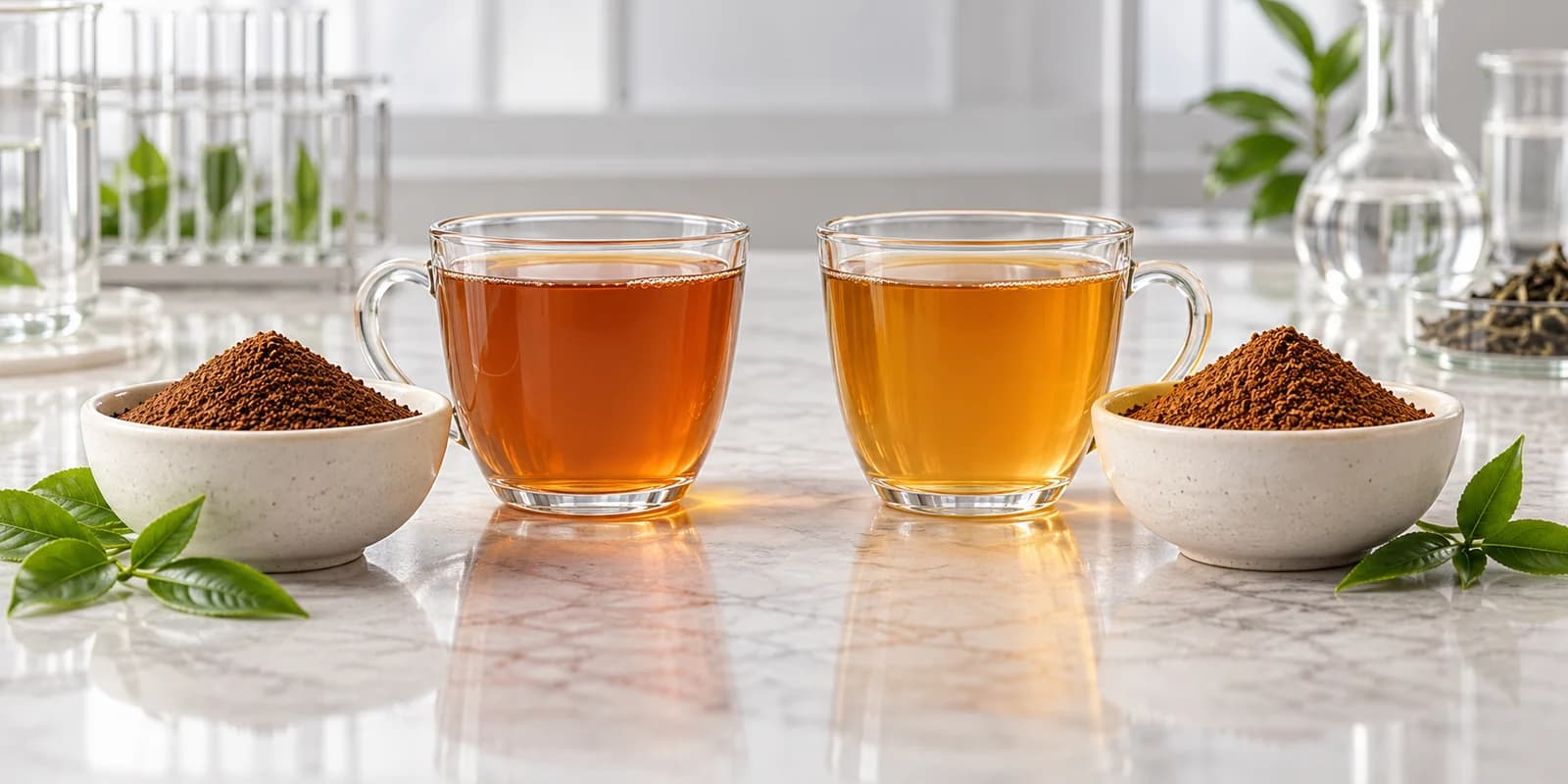
“Tea powder” can describe materially different ingredients. An instant tea powder is generally a soluble tea extract in solid form. Matcha and other milled whole-leaf powders contain suspended leaf material. Some products may include other components, but their exact identity and composition must be confirmed from the product-specific information supplied for the selected sample.
This distinction affects the development route:
| Tea format | What enters the beverage | Primary application questions |
|---|---|---|
| Instant tea powder | Soluble tea extract solids, subject to product definition | Dissolution, flavor delivery, clarity or haze, heat response and compatibility |
| Matcha or milled leaf powder | Fine leaf particles as a suspension | Wetting, agglomeration, particle suspension, mouthfeel, sediment and color |
| Brewed leaf extract prepared in-house | A liquid infusion produced by the beverage maker | Extraction consistency, filtration, holding time, water and equipment demand |
The format should be written into the project brief. Otherwise, procurement may request an “instant matcha” or “soluble tea” while product development expects the appearance and mouthfeel of a whole-leaf suspension.
What can happen when tea meets plant protein
Tea contains polyphenolic compounds, while many plant-based bases contain appreciable protein. Research on protein–polyphenol systems shows that hydrogen bonding, hydrophobic interactions and other mechanisms can change protein structure and interfacial behavior. The direction and magnitude of the change depend on the specific protein, polyphenol, concentration and processing environment. Laboratory findings for a purified protein–polyphenol pair therefore should not be treated as a prediction for a complete retail beverage.
For a developer, the practical implication is straightforward: observe the actual beverage rather than assuming the interaction is either beneficial or harmful. The same ingredient pair can behave differently when pH, mineral content, temperature or order of addition changes.
pH is a formulation variable, not just a number on the specification
Protein solubility and electrical charge are pH-dependent. Acidification can therefore change the stability of a protein-containing beverage, especially as the system approaches conditions where a particular protein is less soluble. Tea ingredients and other formula components may also shift the finished pH.
Record pH after the complete formula is prepared and again after the intended thermal process if the project requires it. Do not assume that the pH of the base before tea addition represents the finished drink. If an acidified tea beverage is planned, it needs a development path designed for that product rather than a casual adjustment at the end of a neutral formula.
Heat can change both the matrix and the sensory result
Heating can alter protein conformation, viscosity, aroma and color. A room-temperature bench blend may therefore be a useful screening sample but not a production-representative result. Use the intended pasteurization, UHT or hot-fill concept only under qualified technical control, then compare pre- and post-process samples with the same measurements.
The goal is not to label a darker or more opaque sample as defective. The goal is to decide whether the processed appearance, flavor and physical behavior remain inside the project’s predefined acceptance range.
Minerals, sweeteners and stabilizers can change the outcome
Calcium salts, buffering ingredients, sugars, high-intensity sweeteners, fibers, gums and emulsifiers may affect taste or physical behavior. A tea screen performed in plain water cannot capture these interactions. Conversely, changing several components at once makes it difficult to identify what caused an observed difference.
Use a staged design: first compare tea candidates under one fixed base formula, then optimize the preferred candidate with controlled changes to the surrounding formulation.
Build a useful application brief before requesting samples
A precise inquiry helps a supplier propose a relevant category and helps the buyer avoid testing incomparable materials. The brief does not need to disclose confidential intellectual property, but it should define the operating boundaries.
Include at least:
- plant base type, such as oat, soy, pea or almond;
- whether the base is purchased ready-made or prepared in-house;
- finished beverage format and serving temperature;
- tea type and intended flavor direction;
- target appearance, including whether natural opacity or visible suspension is acceptable;
- expected process sequence and thermal treatment;
- available mixing equipment at bench and production scale;
- relevant market and documentation questions;
- packaging format and intended evaluation period; and
- the decision that the sample trial is meant to support.
Avoid using broad phrases such as “high quality,” “good solubility” or “premium taste” without operational definitions. “No visible dry agglomerates after the standard mixing cycle” is testable. “Balanced roasted character at the target serving temperature” can be evaluated by a trained panel. “Premium” cannot be measured consistently unless the team defines it.
A controlled bench test for tea powder in plant-based beverages
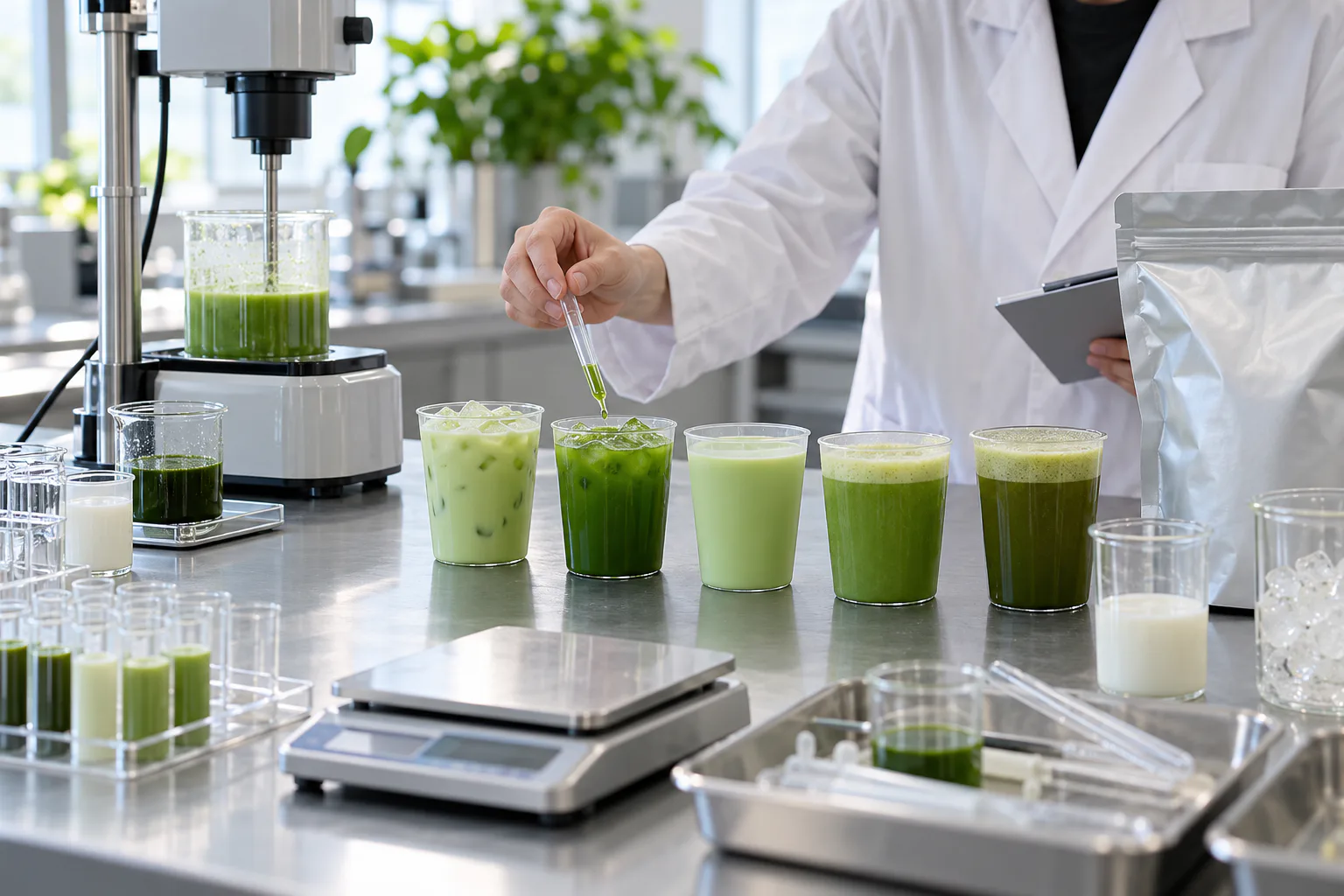
The following workflow is a screening framework, not a universal method. Adapt quantities, equipment, sanitation controls and measurements to the facility’s procedures.
Step 1: Verify sample identity and record the baseline
Assign each sample a code. Record the supplier reference, batch or lot identifier shown on the sample, receipt date and any product information received. Photograph the sealed sample only if internal documentation rules permit it. Keep the selected sample connected to its records; do not rely on color or aroma to identify an unmarked powder later.
Review the dry material under consistent light. Note color, odor and obvious handling characteristics without making a release decision from appearance alone. Different tea processes can produce different colors and bulk behavior.
Step 2: Prepare one fixed base
Use the same base lot for all tea candidates in a comparison. Bring samples to the same starting temperature. Weigh ingredients with suitable equipment and document actual additions. If the complete formula is confidential, preserve the internal version while giving the supplier only the information required to discuss application fit.
Prepare a control without tea. The control helps separate changes caused by the base, heat or storage from changes associated with tea addition.
Step 3: Standardize the order of addition
Order of addition can influence wetting and local concentration. Choose a sequence that can plausibly scale to production and keep it constant across samples. Record whether the tea is added directly, pre-dispersed in part of the liquid or introduced through another validated step.
For a milled leaf powder, observe whether dry islands or floating agglomerates remain. For an instant powder, distinguish dissolution from general mixing: a uniformly colored drink can still contain undissolved material that becomes visible after standing or filtration.
Step 4: Control mixing energy and time
“Mix well” is not a reproducible instruction. Record mixer type, vessel geometry, batch mass, speed setting, mixing time and liquid temperature. If these details cannot be translated directly to production scale, treat the bench result as comparative rather than predictive.
Do not use excessive shear merely to make every sample look acceptable. A material that requires equipment unavailable on the production line may not be a practical fit. Equally, a poor bench result with a weak hand-stirring method does not prove that an ingredient will fail under the intended industrial process.
Step 5: Evaluate immediately after mixing
At a fixed time after preparation, record:
- visual uniformity and surface foam;
- dry agglomerates or wall deposits;
- color using consistent lighting or an instrument if available;
- aroma and flavor at the intended serving temperature;
- astringency, bitterness and plant-base notes using agreed vocabulary;
- pH and viscosity when relevant; and
- sediment or phase separation in a standardized container.
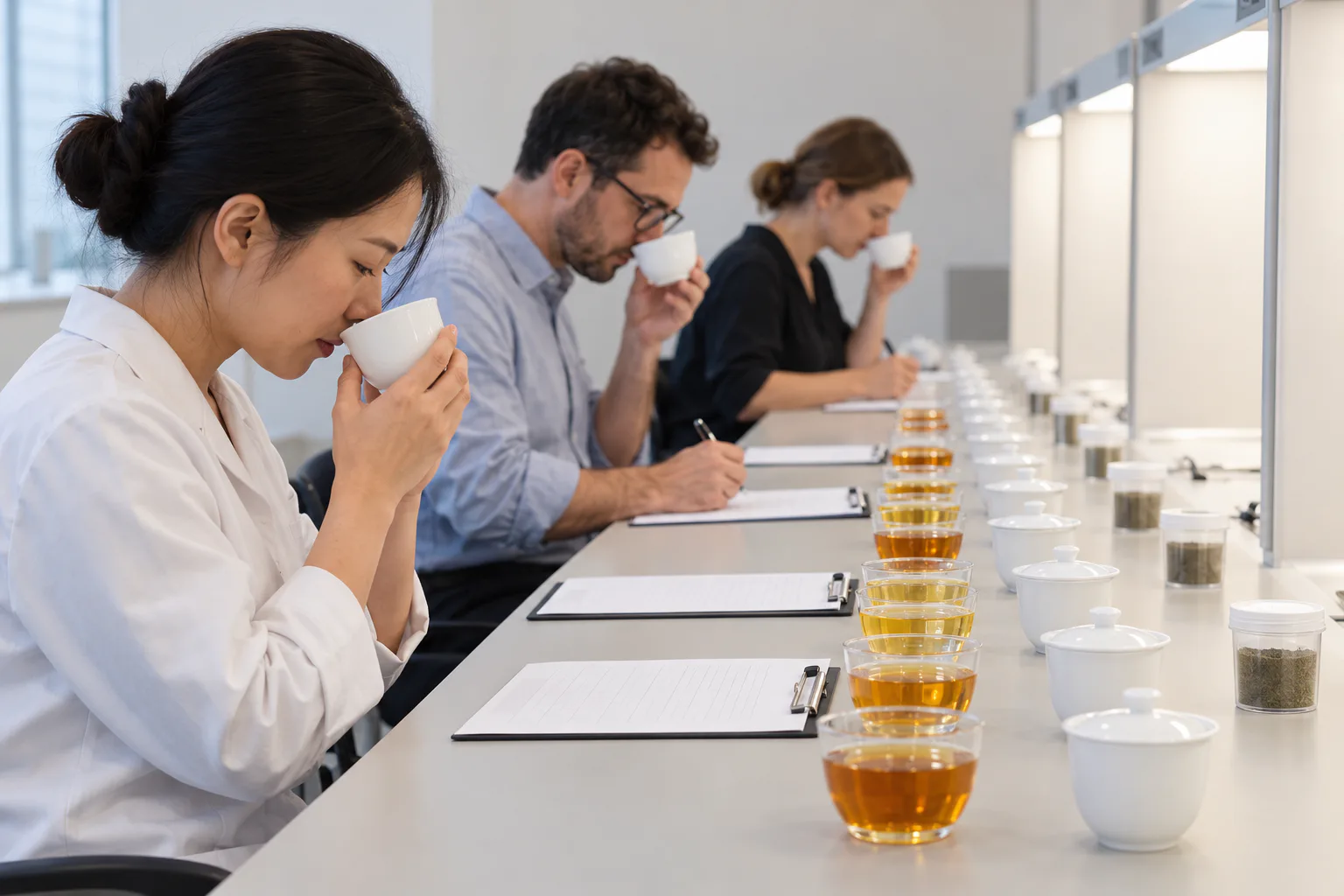
Use coded samples whenever possible. Knowing which sample is expected to perform best can influence sensory and visual judgments.
Step 6: Apply the intended process
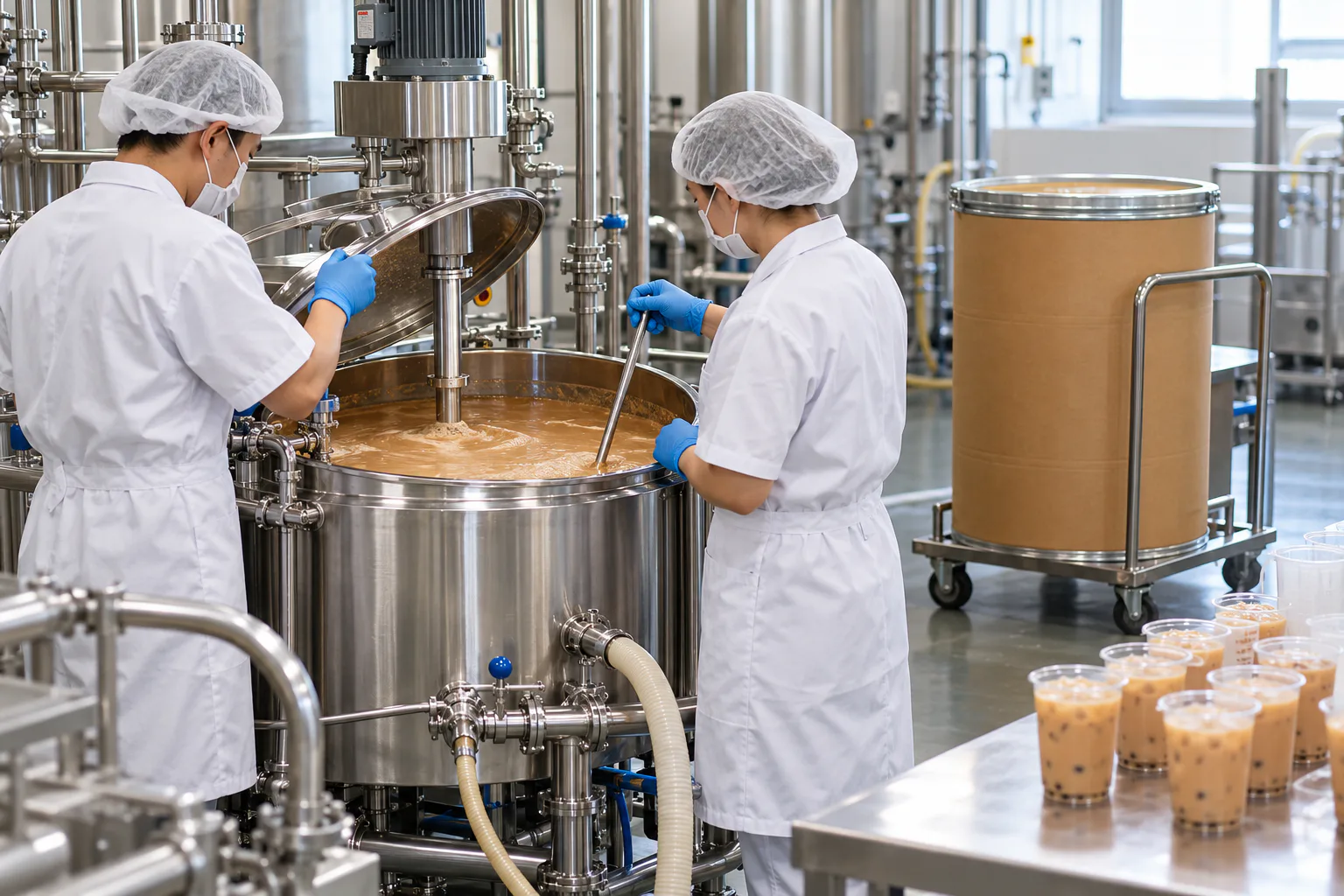
Process a representative portion under the project’s controlled pilot method. Record temperature history, holding time, homogenization stage and cooling conditions as applicable. Do not present a laboratory simulation as equivalent to commercial validation.
Compare the processed sample with its pre-process state and with the control. Look for changes in aroma, color, viscosity, sediment, oiling-off, ringing or visible phase boundaries. These are neutral observations about a formulation system, not evidence of a supplier defect.
Step 7: Observe over time
Choose observation points that match the development stage. An early screen might include preparation, post-process, 24-hour and short refrigerated observations. A shelf-life program requires a separately designed protocol, appropriate microbiological controls and packaging evaluation.
Avoid claiming shelf life from a few days of visual stability. Short tests can eliminate unsuitable candidates and reveal questions; they cannot replace a validated stability and safety program.
How to interpret common observations without overdiagnosing
The drink is uniform at first but separates later
First determine what is separating. A clear lower layer, a cream line, leaf sediment and fine protein flocculation are different phenomena. Record the time, temperature and container. Compare the tea sample with the no-tea control and repeat the preparation before changing the formula.
Potential variables to investigate include tea format, total solids, pH, mineral balance, mixing sequence, homogenization and heat history. Do not assume that increasing stabilizer is the correct first response. A root-cause screen should change one meaningful variable at a time.
The flavor becomes more astringent in the plant base
Astringency perception depends on tea composition, dosage, protein interactions, sweetness, temperature and the rest of the flavor system. Compare samples at the same serving temperature and sweetness. If a lower tea dosage improves balance but weakens aroma, the team may need to reassess the tea type or the overall flavor architecture rather than chase one attribute in isolation.
The color changes after heating
Heat-related color change can result from several components and interactions in the finished system. Measure the change consistently and decide whether it falls inside the product concept. A color shift is not automatically a safety signal or an ingredient nonconformance.
Sediment appears in a whole-leaf tea beverage
Whole-leaf powders are suspensions, so some settling tendency may be inherent to the chosen format. The relevant decision is whether the sediment rate, resuspension behavior and mouthfeel are acceptable for the product and package. If a transparent beverage with no settling is the target, a soluble instant tea format may be more aligned than a milled leaf powder.
The sample works on the bench but not in the pilot plant
Check the process translation. Batch depth, impeller design, powder addition point, hydration time, shear, heat profile and transfer steps can all differ. Compare energy and sequence rather than simply increasing mixing time. Retain a sample from each stage if the facility’s quality procedure permits it.
Procurement questions after the application screen
Technical fit is only one part of approval. Once a candidate performs acceptably, procurement and quality teams should confirm the exact product identity and the documents needed for their market and application.
Useful questions include:
- What is the precise commercial product name and tea category?
- Is the material an instant extract powder, matcha or another milled tea powder?
- Which product-specific specification and sample identifier apply?
- What packing format and storage instructions are proposed for this product?
- Which lot-related documents can be supplied, and at what stage?
- Which regulatory or customer documents must the buyer independently assess for the destination market?
- How will an approved sample be linked to a later commercial lot?
- What change-notification expectations should be agreed before ordering?
These questions do not imply that every document or feature is available for every product. They create a checklist for a direct, product-specific discussion.
A decision table for candidate selection
| Decision area | Evidence to collect | Avoid this shortcut |
|---|---|---|
| Ingredient identity | Product name, format, sample code and supplied information | Treating all “tea powders” as interchangeable |
| Bench compatibility | Controlled comparison in one fixed plant base | Judging only in water |
| Process fit | Recorded mixing and pilot process observations | Assuming room-temperature results survive heat |
| Sensory fit | Coded evaluation at intended serving conditions | Choosing on dry-powder aroma alone |
| Physical behavior | Timed observations of sediment and phase behavior | Calling one clear beaker a shelf-life result |
| Commercial readiness | Packing, documents, traceability and buyer review | Approving a category without approving a named product |
Frequently asked questions
What tea powder works best in oat milk?
There is no universal best option. The appropriate tea ingredient depends on whether the target is a soluble tea drink or a whole-leaf suspension, as well as the oat base, processing conditions, sweetness, desired color and flavor. Compare coded candidates in the actual oat formula.
Can instant tea powder dissolve directly in a plant-based beverage?
Some instant tea powders may disperse and dissolve under the project’s mixing conditions, but performance should be tested in the complete base. Protein, fat, viscosity, temperature and order of addition can make the result different from dissolution in water.
Why does tea sometimes create haze in a protein beverage?
Haze can be influenced by naturally suspended material, protein–polyphenol interactions, pH, heat, minerals and other formulation components. Haze alone does not identify the cause. Compare with a control and investigate the complete process systematically.
Is matcha suitable for a plant-based latte?
Matcha can be used when a whole-leaf profile, green appearance and suspended-particle format fit the product concept. The developer should test wetting, sediment, mouthfeel, color and process stability in the chosen base. Matcha should not be evaluated as if it were a fully soluble extract.
Should tea be added before or after homogenization?
The suitable addition point depends on the tea format, formula and equipment. Test a documented sequence that can scale safely, and evaluate both physical behavior and sensory quality. A supplier can discuss ingredient handling, but the beverage manufacturer must validate its own process.
Does protein–polyphenol interaction always cause instability?
No. Research shows that protein–polyphenol interactions can change structure and interfacial properties, but outcomes vary with the specific materials and conditions. A purified laboratory system cannot predict every commercial beverage. The finished formula must be tested.
How long should a plant-based tea beverage be observed?
Use short observations for screening and a separate, qualified shelf-life protocol for a commercial decision. The latter should reflect the real process, package, storage and relevant safety controls. A stable appearance for several days is not a shelf-life claim.
Conclusion
Selecting tea powder for a plant-based beverage is a matrix-and-process decision. Start by identifying the tea format, then compare named samples in one controlled base. Record addition sequence, mixing, heat history, pH, sensory response and physical behavior over defined observation points. After technical screening, connect the preferred sample to its product information, packing and traceability records.
This approach produces a defensible application decision without pretending that one ingredient is universally superior. It also gives the supplier a clearer brief and gives the buyer a cleaner trail from sample to pilot evaluation.
Educational disclaimer
This article provides general educational information only. It is not purchasing, commercial, legal, regulatory, food-safety, nutritional, medical or technical decision advice. Examples describe neutral industry evaluation methods and do not represent a Healsun factory, customer project, incident, test result or performance guarantee. Product identity, composition, specifications, documents, packing and suitability must be confirmed for the named product and independently validated in the buyer’s application and destination market.
References
- ISO 6079:2021 — Instant tea in solid form — Specification
- ISO 20715:2023 — Tea — Classification of tea types
- Structural Characterization and Evaluation of Interfacial Properties of Pea Protein Isolate–EGCG Molecular Complexes
- Emulsifying properties and antioxidant activity of soy protein isolate conjugated with tea polyphenol extracts
- Complexation Strategies for Enhancing Water-Soluble Protein Stability and Functionality
- Process-Induced Molecular-Level Protein–Carbohydrate–Polyphenol Interactions in Milk–Tea Blends