Introduction
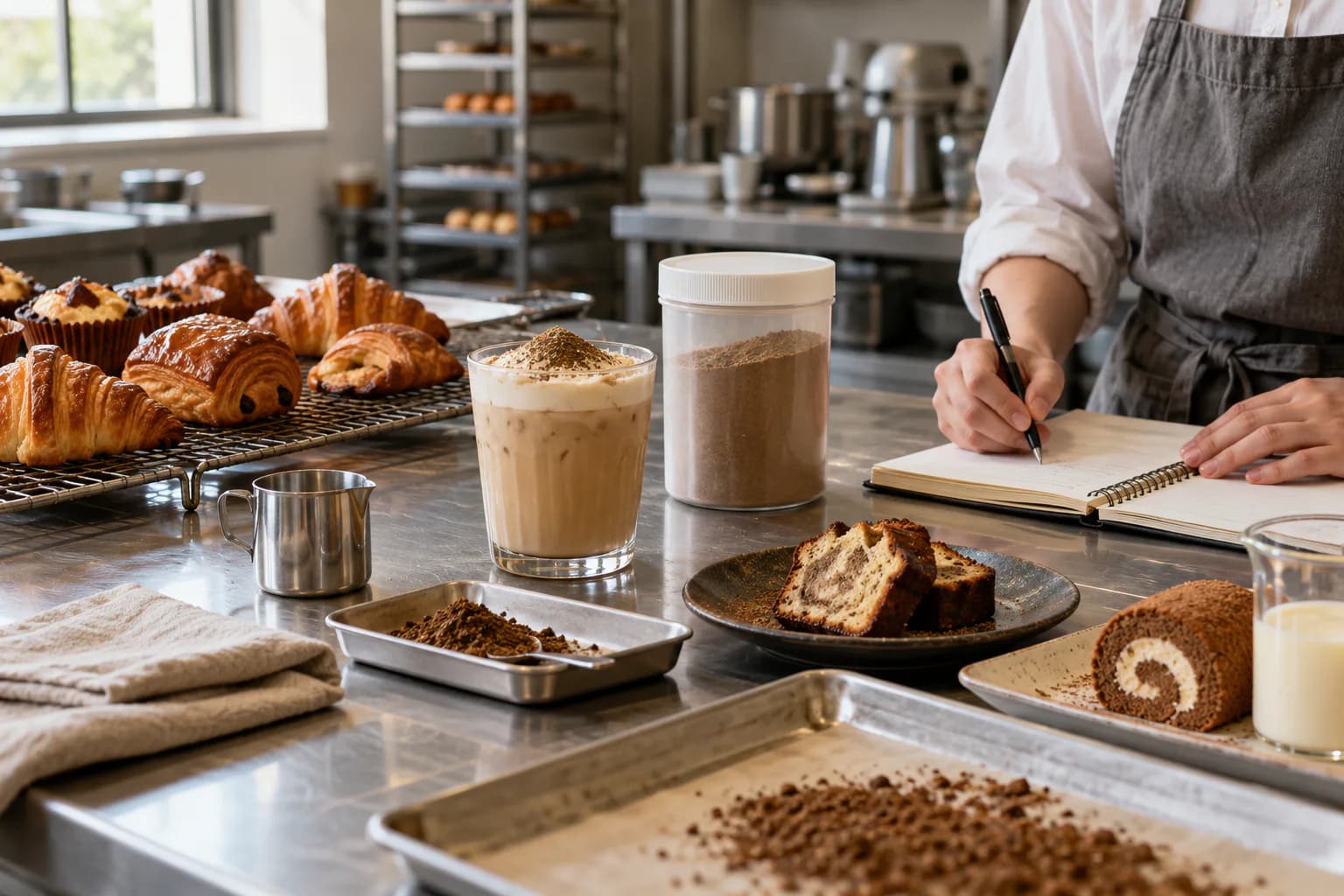
Choosing hojicha powder for a bakery or dairy application starts with the finished product, not with a generic grade label. A buyer developing ice cream has different evaluation conditions from a team developing cookies, cake filling or a cultured dairy product.
The practical goal is to create a brief that connects the selected sample to one recipe, one process and one agreed sensory direction. This makes sample feedback useful to both procurement and product development.
Define the finished application, describe the roasted tea profile you want, and compare identified samples in the actual recipe before approving a product.
Name the finished product first
Begin with a specific application. “For food use” or “for bakery” is too broad to guide a meaningful sample discussion.
Useful starting points include:
- the exact product type, such as a cookie, cake, cream filling, ice cream or milk-based dessert;
- whether the product is baked, frozen, fermented, filled or mixed without further heating;
- the ingredients that will strongly influence the tea profile, including dairy components, fats, sweeteners, cocoa or other flavors;
- the intended serving condition and appearance;
- the destination market and project stage.
You do not need to disclose a confidential formula in the first inquiry. You do need to give enough context for the supplier to understand what the sample will be asked to do.
Define the sensory direction without relying on grade names
Hojicha is associated with a roasted tea character, but the category name alone does not define the result in your finished product. Avoid asking only for a “high grade” or “strong” powder. These terms can mean different things to different teams.
Instead, describe what your panel should evaluate:
| Evaluation area | Questions for the development team |
|---|---|
| Roast character | Should the finished product have a light toasted note or a more prominent roasted-tea direction? |
| Balance | How should the tea character sit beside dairy, fat, sweetness and other flavors? |
| Aftertaste | What finish is acceptable in the intended serving format? |
| Appearance | What prepared color range fits the product concept? |
| Texture | Are visible particles, sediment or a dry sensation relevant to acceptance? |
Treat these as targets for testing, not as universal properties of all hojicha powders.
Compare samples in the actual recipe
A dry-powder observation or a cup prepared in water cannot approve a bakery or dairy application. Use the intended formula, or the closest controlled bench version available.
Keep the comparison method consistent. Record the sample identity, dosage, batch size, mixing order, processing conditions and evaluation time. If the formula contains a milk base, fat system or strong sweetener, use the same system for every candidate.
For baked products, compare the batter or dough and the finished item. For frozen or chilled products, evaluate after the relevant setting, freezing or holding step. If the product changes during its expected use period, include the same observation points for each sample.
The purpose is not to claim that one powder behaves the same in every process. It is to establish evidence for your specific product.
Separate formula effects from ingredient effects
When a trial misses the target, change one controlled variable at a time. A weak tea impression may relate to sample choice, dosage, sweetness, fat level, another flavor or the processing sequence. Changing several factors together makes the next purchasing decision difficult to explain.
A simple trial record can include:
- sample name and supplier reference;
- recipe version and dosage;
- addition and mixing method;
- relevant process conditions;
- prepared color, aroma, flavor, aftertaste and texture observations;
- the panel decision and required follow-up.
This record also helps procurement confirm that the quoted product is the material evaluated by the development team.
Review production handling before scale-up
Bench approval is only one stage. Discuss how the selected powder will be received, identified, added and controlled in production.
Ask your operations team whether the proposed pack is practical for the planned batch size and handling method. Confirm the product-specific preparation and storage instructions supplied for the selected material. If the factory has questions about addition sequence, mixing, screening or dust control, raise them before a larger trial rather than assuming that every powder should be handled in the same way.
No universal dosage, temperature or processing limit is stated here. Those decisions depend on the selected product, formula, equipment and evidence available to your team.
Confirm the product and documents
Before commercial approval, connect the sample to its product information. Request the specification and the documents needed by your quality and regulatory teams. Confirm packaging, labeling, storage instructions, shelf-life information and available batch documentation for the exact item being considered.
Do not infer origin, certification, composition or suitability for a market from a product name or photograph. Any required attribute should be confirmed with supporting information.
For a broader sample workflow, use the tea powder sample evaluation guide. You can also review the Hojicha Powder product page before preparing an inquiry.
Common questions
Can a beverage trial approve hojicha powder for a bakery product?
No. The two applications use different formulas and processes. Evaluate the identified sample in each intended product.
What dosage should a buyer request?
There is no universal dosage in this guide. Establish a controlled trial range with your development team and discuss product-specific guidance with the supplier.
Is the darkest powder automatically the strongest?
A photograph or dry-powder color is not enough to establish flavor strength or finished-product performance. Compare samples in the same recipe and process.
What should be included in the first inquiry?
Name the finished product, processing format, target roasted-tea direction, destination market, project stage and the documents your team expects to review.
Discuss your hojicha application
If you are developing a bakery or dairy product, contact Healsun with the finished format, process and evaluation questions. Product-specific specifications and commercial details are confirmed privately.